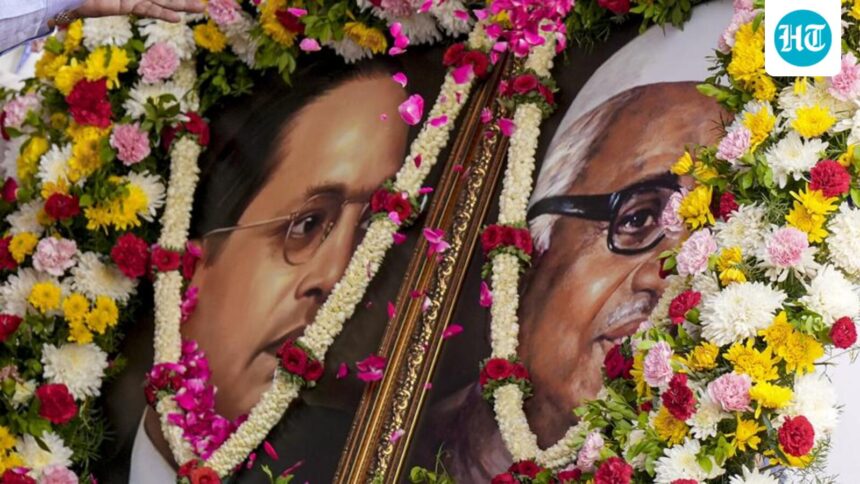
On April 14, the annual spotlight remained on processions and politics to mark the birth anniversary of Bhimrao Ambedkar, the chairman of the Constitution Drafting Committee who championed the rights of Dalits. The more profound and politically significant programs led by Dalit women across the states, demanding equality with dignity, have gone almost unnoticed.

Until years ago, the stage and speeches in north India on April 14 were dominated by men, unlike Maharashtra and neighboring states, where Dalit women were at the forefront of the Ambedkarite movement. This year, Dalit women have been at the forefront of political non-alignment programmes, especially in Uttar Pradesh, where elections are less than a year away. Women took out candlelight processions, dressed statues, and spoke at conferences about Ambedkar and their constitutional rights. Leaflets were distributed. Events will be held throughout the month.
In places like Yavatmal in Maharashtra, Dalit women celebrated their empowerment and cultural pride with flash mobs and performances.
Sangapalli Aruna, Executive Director of Mukti Project, which works for marginalized communities, said there was a tangible shift evident on April 14, which primarily became a day to spread awareness and reflect on the journey of empowerment and equality, along with cultural identity and pride. Recalling her childhood, she said that men outnumbered women everywhere in Ambedkar Jayanti.
Ambedkari women have increased their participation through plays, satires and parodies on stage and social media. Groups, large and small, have dedicated staff trained to move the mission forward. They support survivors of caste-based sexual violence, run education centres, etc. Ambedkarite women document the history and literature of Dalit women’s organizations.
Manjula Pradeep, who is from Ahmedabad and has trained thousands of Dalit women in leadership skills, said it is difficult to provide numbers, but they are all working towards the mission in their areas. Her campaign is centered around “Untouchability – Speak Up, Educate, Unite and Cheer”.
From policy advocacy, legal aid, to equality labs, Mahila Mandals, Ambedkar Bhawans and clubs are spreading awareness by telling the history of Dalit icons through plays, music and satire.
For Rakhi Rawan, from Sikra Khurdai village in Uttar Pradesh’s Modi Nagar, Ambedkar’s mission is a year-round one. “We have to pull women out of the trap of superstition and discriminatory structure of Manufad [caste-based inequalities]…This is possible by educating women about the rights given to them by Ambedkar.”
They owe their existence to Ambedkar, Rawan said. For her, what matters is expanding his mission. It didn’t matter if she had 20 listeners or 100. Despite family resistance in the early years, Rowan traveled across the states, and over the past decade she signed up 40,000 people to this mission. Rawan said the processions on Ambedkar Jayanti should show his contribution to their liberation.
Many Ambedkarite women are also at the forefront of publishing and distributing booklets to educate Dalits about their iconography. The silent literary revolution, which continues today, was preceded by the emergence of Dalit leaders such as Bahujan Samaj Party founder Kanshi Ram and former Uttar Pradesh chief minister Mayawati.
Dalit literature was the backbone of the Ambedkar movement in places like Maharashtra. Women have been writing about class discrimination and fighting for their rights since the early 1950s.
Sumedha Buddh of the National Federation of Dalit and Adivasis Organizations noted that after Mayawati came to power, research was done on the contribution of Dalit women freedom fighters like Uda Devi Passi, Jalkari Bai, Mahaveri Devi and Avanti Bai Lodhi, and books were published. Likewise, the larger community learned about Savitribai Devi Phule’s social interest only after a book on it, written in Marathi, was translated into Hindi.
Budde said Ambedkarites are creating their own YouTube channels, newspapers and magazines, to which women actively contribute, to combat discrimination. Soon, they will establish a bank to encourage entrepreneurship.
Some of these women are associated with the All India Back and Minority Communities Employees Federation and the BSP. Just as women have played a pivotal role in the success of the BJP, they have formed the backbone of the BJP in Uttar Pradesh. Inspired by Mayawati’s meteoric rise, many women have adopted her style and remained loyal to her, underscoring why she has not been left out despite the erosion of the BSP’s support base.