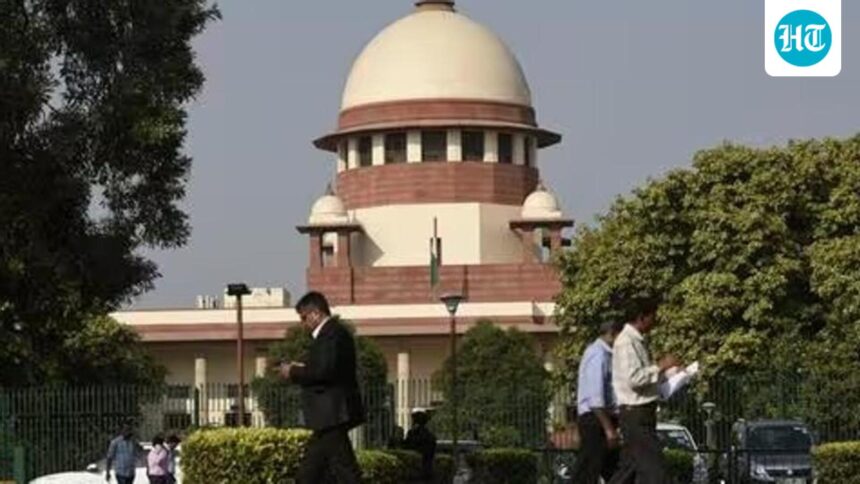
The Supreme Court has acquitted a man accused of raping and killing a school principal in Assam state in 2017, saying there was no evidence linking him to the crime and that even his arrest was “shrouded in a cloud of suspicion.”

A bench of Justices Vikram Nath and Sandeep Mehta dismissed the Assam government’s appeal and upheld the Gauhati High Court’s decision to acquit Moinul Haque of rape and murder charges.
Going further, the court also quashed his conviction under Section 201 of the Indian Penal Code for destruction of evidence, although Haq did not appeal that part of the ruling.
“…The mere arrest of the defendant in this case is shrouded in a cloud of suspicion,” the bench held, underscoring the serious weaknesses in the prosecution’s case.
In its ruling issued on April 16, the court clarified that the defendant’s failure to appeal his conviction for destroying evidence does not prevent it from exercising its appellate powers to achieve full justice. The court said: “The defendant’s failure to appeal does not in itself deprive this court of its appellate jurisdiction,” citing its broad powers to correct what it considered a miscarriage of justice.
Read also:Participation in elections is vital but citizens cannot be forced to vote: Supreme Court
Additional Chief Advocate General Chinmoy Pradeep Sharma appeared for the Assam government while Senior Advocate P V Dinesh assisted the court as amicus curiae in representing Haque.
The case relates to the rape and murder of Arnamai Bora, 58, headmistress of Elasi Deori LP School, in Hojai district of Assam. On May 31, 2017, Bora was assaulted while returning home from school. She was raped, murdered and her body then dumped in the Kopili River, a crime that sparked widespread outrage across the state and was described as one of the most shocking incidents in the region at the time.
After investigation, in 2018 the court convicted Haque and sentenced him to death. One of his co-accused, Salimuddin, was convicted of a less serious crime and sentenced to five years’ rigorous imprisonment. However, the Guwahati High Court in 2022 quashed Haque’s conviction and death sentence, citing a lack of credible evidence linking him to the crime.
In its ruling, the Supreme Court upheld the Supreme Court’s reasoning, concluding that the prosecution had failed to establish a credible chain of circumstances necessary for a conviction in a case based on circumstantial evidence. She pointed out that there were glaring contradictions and gaps in the investigation that cast doubt on the fundamental aspects of the case, including the circumstances that led to Haq’s arrest.
“We are firmly of the opinion that the finding recorded in the impugned judgment dated 22 December 2022, to the extent that it affirms the conviction of the respondent-accused for an offense punishable under Section 201 IPC and the sentence imposed thereunder, is not sustainable on the facts and in law and is therefore set aside.”
By acquitting Haque of all charges, including the crime of destroying evidence, and ordering his immediate release, the Supreme Court emphasized that criminal convictions must be based on beyond reasonable doubt, not on suspicion, no matter how strong.