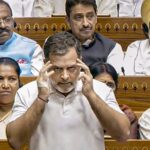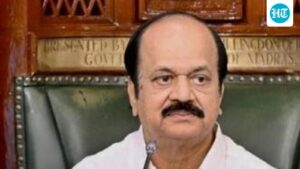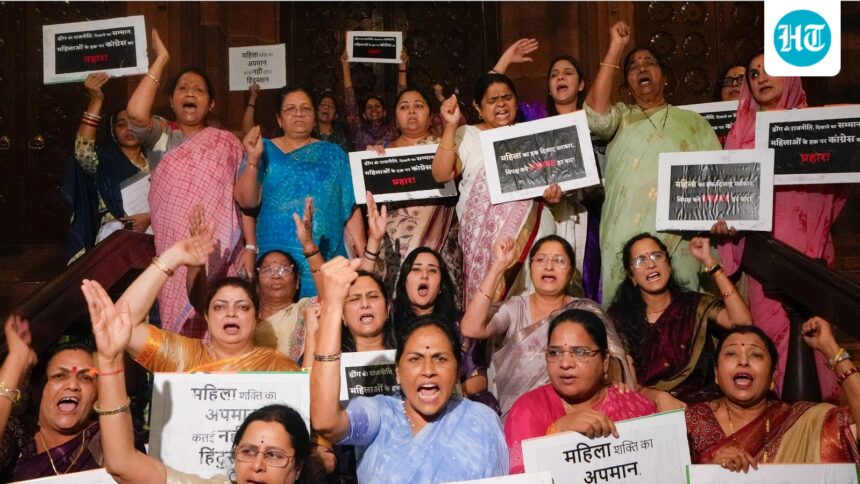
The Constitution (131st Amendment) Bill, 2026 – the Narendra Modi government’s proposed amendment to the Women’s Reservation Act, 2023 – was defeated in the Lok Sabha on Friday evening after failing to secure the two-thirds majority required to pass such a constitutional change. that it The first defeat for a government bill since the BJP-led NDA with Modi as prime minister came to power in 2014, and the first time a Constitutional Amendment Bill has failed in the Lok Sabha since 2011.

The bill received 298 votes in favor and 230 votes against. Of the 528 members who voted, the bill needed 352 votes — two-thirds — to pass. He fell by 54 votes.
After the government’s defeat It withdrew two other bills introduced alongside it: the 2026 Boundary Delimitation Bill, which would have imposed a new redrawing of electoral district boundaries based on the 2011 census; and the Union Territories Laws (Amendment) Bill, 2026, which covered Delhi, Puducherry and Jammu and Kashmir as union territories that also have assemblies.
Parliamentary Affairs Minister Kiren Rijiju said the three bills were “intrinsically interconnected” and confirmed that the government would not go ahead with the remaining two bills.
Read also: Why did the Women’s Quota Bill fail in Lok Sabha despite increased votes in its favour? He explained
What the bills proposed
The 131st Amendment sought to raise the constitutional ceiling for Lok Sabha seats from 550 to 850, and delink the implementation of the Women’s Reservation Act, 2023 – Nari Shakti Vandhan Adhinyam – from the upcoming census.
under The original 2023 law, 33% reservation for women in Lok Sabha and state assemblies will come into effect only after the first census after the commencement of the law, effectively meaning not before 2034 with the current census being conducted, which could take two years to complete, with delimitation to follow.
The new bills aim to activate quotas by 2029, through a process of demarcation based on the 2011 census. This demarcation based on old data brought back problems. Regional inequality and class calculus as well.
Read also: It shows what Priyanka Gandhi achieved in 5 minutes compared to Rahul’s 20 years
What the government promised
Both Prime Minister Modi and Home Minister Amit Shah made personal appeals in the House over two days during the special session, assuring that the proportional seat quota for southern states would not be reduced.
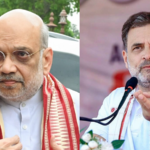
On Friday, Shah made a last-minute presentation from the floor, asking opposition members whether they would support the bill if he returned within an hour with a revised version that formally guaranteed the 50% proportional increase for all states. The offer was rejected. Samajwadi Party leader Akhilesh Yadav said the opposition does not trust the government.
After the defeat, Shah posted on [women power] I will not stop here; You will travel far and wide.
What did the opposition say?
Throughout the three-day session, the opposition insisted on its support for women’s reservation but did not support the “hasty” demarcation. “This was not a bill meant for women, but an attempt to change the electoral map of India. I want to tell the Prime Minister that if the government wants to implement the women’s quota bill passed in 2023, the opposition will support it 100%,” Opposition Leader Rahul Gandhi said after the vote.
Congress leader Priyanka Gandhi Vadra said: “We can never agree to link women’s reservations to delimitation based on outdated statistics.” It does not include other backward classes. “This is a huge win for democracy in our country.”
For the first time since 1931, the caste census became part of the national census, with OBCs counted alongside the SCs and SCs that were already counted and given quotas in Parliament.
Read also: There is a large class angle in the women’s share, the demarcation link
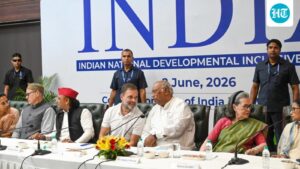
Opposition leaders also said that the quota amendment was introduced only so that Prime Minister Modi can appear as “pro-women” before voting in the elections. West Bengal and Tamil Nadu Assembly elections will be held in the next two weeks.
What’s happening now
The original 2023 Nari Shakti Vandan Adhiniyam is still on the books; He was even notified in the newspaper on Thursday evening. But it cannot be implemented without a new demarcation exercise.
If the government intends to implement it early, it must now return to Parliament with new options, such as reserving a third of the current 543 seats, at least for the time being. A cabinet meeting is scheduled for Saturday.