Logo text
Jesus Christ (Latter-day Saints), there are some terrible things (still) happening within the FLDS community.
Netflix Trust me: the false prophet (2026) is a four-part documentary series depicting the rise of Samuel Pittman, the self-proclaimed heir to the Fundamentalist Church of Jesus Christ of Latter-day Saints (FLDS) convicted child abuser Warren Jeffs. If you thought Jeffs was a bad guy, well, you’re right, but cult expert and sexual assault survivor Dr. Christine Marie says Hollywood Reporter Her friends within the community say Pittman was worse.
A decade before Rachel Dritzen’s 2022 Netflix docuseries Keep it sweet: prayer and obediencewho chronicled Jeffs’ crimes against children, was arrested and sentenced to life in prison plus 20 years. Mary, who has a doctorate in psychology and specialized in media psychology, and her husband, videographer Tolga Katas, moved to the small community of Short Creek, Utah, to help. They ended up helping more than they could have imagined.
Over the course of several years there, the pair went undercover, of sorts, to infiltrate Bateman’s cult and expose his sordid behavior. After gaining Bateman’s trust under the guise of filming footage for a live documentary about his teachings, Catas’ camera captured evidence of continuing horrific abuse, including more sex crimes against minors. The footage was provided to local police and the FBI, and then to Dritzen. The result was a number of arrests that led to long prison sentences – Batman will serve 50 years – as well as… Trust me: the false prophet.
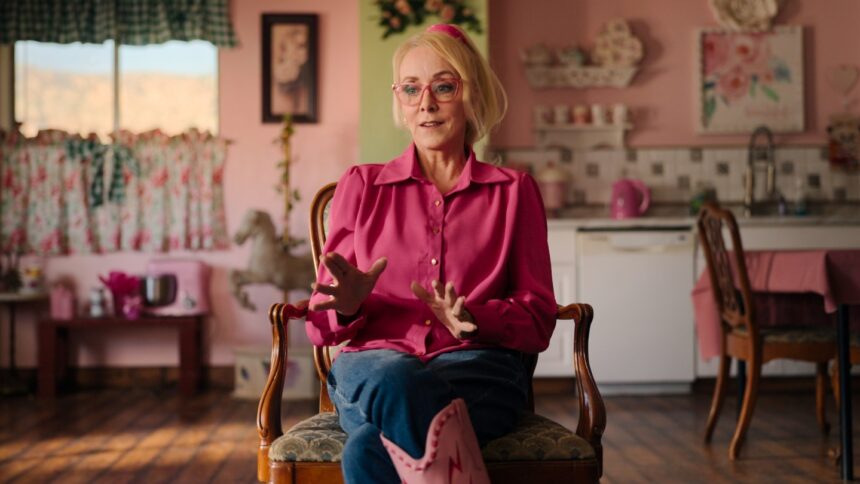
He reads THRAn interview with Marie, the undisputed heroine of the documentary series, is below.
***
Trust me It has a lot of producers (Jeff Skoll, Courtney Sexton, Miura Kite, Dritzen, Doreen Razam, Zachary Herman, Jamila Efron, Katas). Your husband is one. Why aren’t you?
I didn’t want to be. [Katas] He was probably an executive producer because he shot a lot of the footage. He had no creative control and neither did I. We were in the middle of it and wanted to trust the experts. We were by no means experts in documentaries. We’d never done that before – I wanted to clean my hands of it and let them do whatever it takes.
Since I knew I was a character, I didn’t want to be inculcated by my own thoughts, so it wouldn’t seem like some kind of motive on my part.
What has been the response to the documentary — and to the documentary’s popularity — from the FLDS community?
Well, this is a fascinating question because – understand that the FLDS is still a closed, insular community and does not have an online presence as a general rule. I don’t want to get any of the FLDS people in trouble, but they were watching this and word got out. Some of the FLDS, they had family members who watched it or sent them screenshots of some of the comments, and it was surprisingly positive because it’s like the first real documentary that shows the FLDS for what they really are. It’s not all about their crimes, or it’s not all about Warren Jeffs, and a lot of the comments were that he helped people break down their own stereotypes and realize that these FLDS people were different than they thought based on all the media coverage from the past. I’m very happy about that.
What was the reaction of the non-fundamentalist Mormon population – the regular LDS community?
The mainstream LDS Church is very sensitive about being portrayed as polygamous. They stopped doing that over 100 years ago. Throughout history, ever since they banned polygamy, they have had hostility towards this group in Short Creek, Utah – and all groups that support polygamy. But in recent years, maybe like the last five years, I’ve seen the LDS Church provide humanitarian support here. So this was incredible.
I am very excited about the global reception of this film because I am receiving positive comments and stories from all over the world. One said: “This series has changed me, given me strength, and I have already made the necessary arrangements – tomorrow, I will go in and file a police report against the attacker.” Another person said: “I see myself in this. I know I need to fight and get out of it now.” The series has a real impact on individuals, so I take screenshots of things that people send me, and I send them to people who are in the film, or who are concerned about it, or whatever, because I want them to see that this is making a difference in a real way.
You still live in Short Creek, will you stay there then?
Yes.
Why?
I love him. I love my friends. I have friends who are FLDS and not FLDS. It’s a lovely little town where everyone knows each other. And I have work to do. I’ve built this unique relationship with these stigmatized people, and I feel like they still need me to some extent. I get involved in evictions, I help them – when they’re not surfing the Internet and they need someone to look for something for them, they call me. When someone who is a former FLDS member has a gift or something for their FLDS grandmother, I can figure out how to go back and forth. Our home, we call it Switzerland, because people who are FLDS and former FLDS come and have secret unification meetings. I just don’t know who can replace me now.

Are you planning to expose other cult groups through the medium of unscripted programming, for lack of a better example, To catch the predator?
Well, I’m not planning on catching another predator. I’ve actually been involved in other projects before this, which no one knows, but what I love to do is help people achieve their dreams. So, if they go through something like this, I just want to empower people – and Tolga loves that too. We have a lot of connections, if we can find someone who can help them achieve their dream of becoming a musician or their dream of becoming an actor or getting a new home. Can we somehow find someone to help with a down payment? I really like it very much.
So, no more documentaries or undercover work?
I don’t know anything about documentaries, but no, no more undercover work, if I can help it. I hope to speak in education for law enforcement and child protective services. I just hope I can take what I know and share it with people who don’t understand why people get into these situations. If you don’t understand that, you will accuse someone of a crime when they are a victim, and maybe there is a better way. I’ll give you an example: Noms (Naomi Bestlin), as you know, from the documentary, has a felony. She takes responsibility for what she did, but when you think about it, she was obedient and risked her life. She was a passenger in a car where she was instructed by Sam on what to do, and now she has a felony, but everyone knows what a victim is. I hope I know how to get a pardon for her and Morita (Johnson), because they were so young and so coerced, so it’s something that’s on my heart now.
At the end of the series, we get a little update on what Nomes, now 27, is doing after prison. How is she today?
I moved a lot. She has great work that she can do remotely, and she is immersed in the world. She’s still very innocent, because it takes time to learn how the world works. You know, you didn’t know who Elvis Presley was. I mean, my FLDS friends have never heard of Kim Kardashian. You don’t know how many people from the FLDS community I’ve helped get their first email, and they didn’t even know how it worked and what the application button was. Little by little, we keep hearing something Noms hasn’t quite learned [the cult]. I mean, she’s a great writer, and she’s great at math, but there are other cultural things.
Do Batman’s followers hate you?
People who still believe in Sam hate me, but to be clear, his group is not the FLDS. They are a very small subset of the FLDS. So this is completely different.
Do you see any of them in public still?
Yes. In fact, the other day, I saw someone walking out of the store—a couple of Sam’s believers—and I smiled, waved, and gave them dirty looks. But do you know what? I probably would feel the same if I were in their shoes. I’m still here for them, and even if these people hate me, I won’t hate them either. I know they have things going on in their brains M.
This is probably a very stupid way to ask a question about two very bad men, but since we have Keep it sweet: prayer and obedience Who chronicled the downfall of Warren Jeffs and now your work that he turned into Trust me: the false prophet Who directly ousted his self-appointed successor, Sam Pittman… who was worse?
Well, it’s very funny that you ask that because just this weekend, someone came over, a former FLDS person, and they watched the whole series with a whole bunch of former FLDS people. And what they said was that Sam was worse. Sam was worse. Warren Jeffs influenced a lot of people, but on a personal level, in terms of what he put on those who followed him, their consensus was, yes, Sam Batman was worse.
Is there a new Samuel Batman yet, or is he still running his cult from prison?
They follow him while he is in prison. It’s so frustrating that he can even talk to them from there.