Countless places across the United States bear the name of Alexander von Humboldt. In fact, the German naturalist and polymath has been described as someone who has more species – from penguins and monkeys to orchids – and places bearing his name than any other human being. At the beginning of the nineteenth century, he proposed a radical idea that was also popular in the context of climate change: viewing nature as a “web of interconnected lives.”
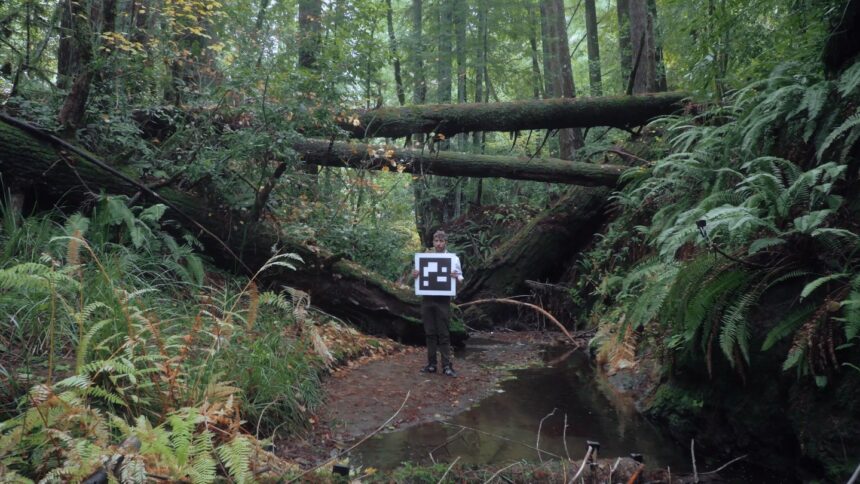
Humboldt USAthe debut feature film from director J. Anthony Svatek, follows in his footsteps, traveling across the United States, from the ancient forests of redwoods to the trails of New York State and the bright lights of Nevada, to explore our evolving relationship with nature. Weaving together the stories of the people in those locations, Humboldt’s words and the director’s thoughts, the kaleidoscopic result is a playful, but also charged, love letter to the natural world.
Humboldt USA It has its world premiere at the International Feature Film Competition of the 57th Swiss Documentary Film Festival Visions du Réel in Nyon, near Geneva, on Wednesday 22 April. The film will then have its US and North American premiere on May 2 at the First Look Museum of the Moving Image, where its festival focuses on “new and adventurous cinema.”
“Countless places across the United States still bear the name of Alexander von Humboldt—the queer naturalist, visionary, and now largely forgotten environmentalist,” the film’s press notes highlight. “The longing director uses three of them as unexpected common ground, weaving through present-day lives: urban activists who green up neglected neighborhoods, scientists who survey redwood forests, and hunters who return bighorn sheep to protected lands. Across generations and landscapes, Humboldt USA He wonders what remains of the vision of “interconnectedness.”
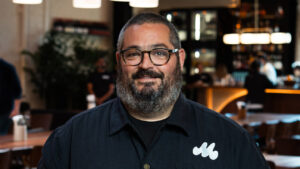
Humboldt USA It is produced by Svatek and Elijah Stevens of Space Time Films, which is also handling sales. Svatek wrote and directed the doc, with Sean Hanley and director Sean Hanley handling the film’s cinematography. Edited by Kaija Siirala and Svatek.
Brooklyn-based Svatic, whose shorts include the 2023 edition Some thoughts on the common frog“, “A collaged cinematic manifesto in defense of beauty amidst political cynicism and environmental alienation” based on an essay by George Orwell and narrated by Tilda Swinton. Raised in the Austrian Alps, as you can already tell, his work examined humans’ fractured relationship with the natural world.

Ahead of the film’s world premiere, Svatek spoke to THR on Humboldt USAHumans’ relationship with nature and what elements of his personal experience reflect Humboldt’s life.
Why did you decide to make a film about Humboldt? What happened to you about his life? I was aware of some of his work, but I did not realize the extent of the impact he had on the United States
I also knew him by name and personality, but not much more than that. In 2015, the best-selling book, Nature’s invention [by Andrea Wulf]which was a very moving autobiography that I read. This made him the gay environmental activist who predicted man-made climate change 200 years ago, which was a very engaging story.
I recognized him in some way, because there were biographical similarities between him and me. He called himself half-American and half-German, and I was half-Austrian and half-American. We have the same birthday. We’re both weirdos. These similarities in his biography had me hooked on that personal level, but the reach and fame he had at the time, and how it played out in the landscape across the United States, was also really interesting to me.
He has become an anchor, and an interesting figure, for thinking about how environmentalism and our relationship with the natural world have changed over the past two hundred years. His approach to the natural world was either this romantic approach or a very scientific approach. It sums up both.
Can you tell me more about these two approaches?
I feel that within the Western model, we still struggle with these two extremes. Nature is either enclosed in a national park or it is the domain of science. Both are highly abstract visions and concepts of the natural world. But then Humboldt talked about how everything is interconnected. Since I’m interested in the way technology has changed our relationship with the natural world, he was an interesting anchor to talk about what interconnectedness means today.
I didn’t want to make a biopic about him, but I saw his name all over the country, and it felt like an invitation to explore the idea of interconnectedness 200 years later and how it manifests itself.
I often try to look at how things are connected and how a cause here can have an effect there. But while watching Humboldt USAI realized myself that there might also be problems with this thinking. How early did you know you were going to address these pros and cons?
I’m so glad you noticed that, because I wanted the film to reflect that complexity. Humboldt, as a person, is also a very complex character, so I wanted the subjects and people I was photographing to reflect that as well, both in their personal stories, but also as something conceptual.
Yes, nowadays, the idea of everything being interconnected has become very popular again, both in the environmental sense and in the technological sense. I’m very skeptical of technology, so a lot of my previous work is about the way technological advances are changing our relationship with the natural world. I have made a number of short films on this topic. Nature is a very abstract experience for many people who live in cities, like me.

How did you choose the locations and find the characters we see? Humboldt USA?
I began selecting place names in Humboldt and tried to keep in mind the range of environments, both social and landscape, to represent the United States. So I wanted something that looked very urban, I wanted something that looked very rural, and I wanted something that looked very technically perfect with California AI people.
I just started spending time in these places, talking to people and trying to connect with them. The selection process has become very intuitive, so to speak. In the case of California, for example, a fellow filmmaker said: “There’s a group of people who call themselves environmental archivists, trying to survey redwoods and bring all this equipment into nature to try to create organic algorithms.”
I heard you worked on this film for several years.
Yes, it took some time. I started my first research photography at the end of 2019, so it’s been almost seven years. I started out in Nevada photographing a sheep transport operation, and then, of course, the coronavirus hit. And then there was a period of a year or two where not much happened.
We hear your voice in Humboldt USA In what sounds like a conversation with Humboldt or a love letter to him. But you also share disappointments and fears. At what point did you decide to record this voiceover as a narrative device?
That was the hardest element, writing the voiceover. Anyone who has made a film with voiceover knows how difficult it can be. I kept coming back to that original feeling I had when I first learned more about Humboldt. I really felt like I fell in love with him over time. But then, as happens when you fall in love or are infatuated with someone, in the end, there is some disappointment. The more time you spend with them, the more complex their nuances become. That’s what makes a person, right?
People are complicated. The people are not these heroic figures as Humboldt was often portrayed, or villainous, as he was sometimes portrayed. He’s just a complex, complex character. Do I felt that this kind of love letter or talking to him was also a good way to highlight the rapid changes that have occurred over the past two hundred years. “This is what interconnectedness looks like now. And you embodied this too! You would have been excited about the technological advances in infrastructure and all that stuff. But look at the consequences of that now!”

Artificial Intelligence has become a big topic of discussion at the right time. How did artificial intelligence make its way to Humboldt USA As a topic?
California AI Story which I started working on in 2021, 2022, before ChatGPT. Sometimes I thought: “What are these people talking about?! I don’t understand this at all.” And then ChatGPT came along, and AI exploded. It just emphasized the importance of all these storylines.
Do you know what to do next?
I have recently been commissioned to do work related to the New York art world, which is a very different subject and environment than what I am used to. But it came at an opportune moment, because over the last year or two, I’ve been thinking a lot about how climate change and the climate crisis have so often disappeared, and in what ways they’ve been compromised.
I am working on a narrative project, or perhaps a hybrid, that engages in the strategy of direct action in art museums by environmental activists. They are using the strategy of attacking public art to draw attention to the climate crisis. This is something I’ve been circling around, but I don’t know what form it will take.
In our media landscape, scandal and outrage are ways we get attention. So, I think their tactic is very interesting. I don’t necessarily agree with everything they do, but I think the idea of deliberately provoking, and then turning it into talking about a topic, is interesting. Throwing a can of soup at a protected Van Gogh painting is a truly desperate tactic, but also a radical one. It’s quite polarizing, and I think that’s interesting. I don’t think my film is going to say this is good or bad, but it will get into the complexities.