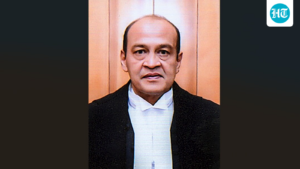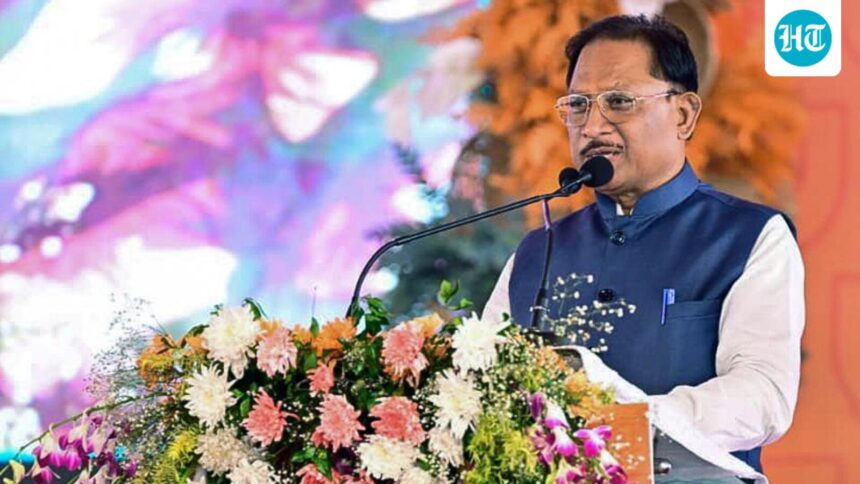
The Chhattisgarh government on Wednesday decided to form a committee headed by retired Supreme Court judge Rangana Prakash Desai to prepare a report on the implementation of the Uniform Civil Code, the state government said in a statement.

She added that Prime Minister Vishnu Deo Sai, who chaired the Cabinet meeting that decided to appoint the committee, has been empowered to nominate the committee members.
The government said that issues such as marriage, divorce, inheritance, adoption, alimony and family disputes in the state are currently governed by different personal laws based on religion.
He said that the presence of multiple personal laws leads to inequality in legal processes and makes the justice system more complex, noting that Article 44 of the Constitution of India also calls for work to implement a uniform civil code for all citizens.
The committee will seek suggestions from citizens, organizations and experts, and may also seek comments through an online portal. Based on its recommendations, the draft law will be prepared and presented to the Council of Ministers for approval and presented to the State Council.
The UCC is a controversial and polarizing issue, and refers to a common set of laws relating to personal matters such as marriage, divorce, inheritance and succession for all. Article 44 of the Constitution, one of the directive principles of state policy, upholds UCC. But religion-based civil laws have governed personal matters since independence.
In February 2024, Uttarakhand became the first state in the country to pass the UCC Act. Gujarat followed suit last month. Last week, the neighboring state of Madhya Pradesh also announced that it would form a committee to recommend next steps for UCC.
The All India UCC is the third unfulfilled ideological promise of the BJP. The construction of a Ram temple in Ayodhya and abrogation of Jammu and Kashmir’s semi-autonomous status under Article 370 of the Constitution, the other two major ideological goals, have been achieved since the BJP came to power at the Center in 2014.
Justice Desai, who will head the Chhattisgarh panel, had previously chaired the committees that drafted UCC laws in Uttarakhand and Gujarat as well.