Thammasarasi, 56, a long-time resident of Urappakkam near Chennai, receives financial assistance from $1,000 per month for the past 23 months under the state government Kalaignar Magalir Urimai Thogai (cash grant for women serving 11.5 million beneficiaries) and uses free bus travel, which was provided through the Vidiyal Payanam scheme launched in May-June 2021, to work and visit her daughters.

She also lives in a house built under a government scheme, Kalaignar Kanavu Illam Scheme which was officially announced in the financial year 2024-25.
Thamisarasi says these schemes have made her less worried about money. “I can visit my daughters whenever I want without worrying about the additional costs.”
Both cash grants and free travel were made possible by the schemes launched by the Dravida Munnetra Kazhagam (DMK) after its victory in the 2021 Assembly elections. Welfare schemes are certainly not new to the state which they pioneered under the two Dravidian parties, the TDP and its rival All India Anna Dravida Munnetra Kazhagam. It has now become almost universal across India, in elections at all levels.
The state is also not new to freebies; for decades, families in the state have received everything from color televisions to kitchen appliances.
In this election too, cash handouts and freebies play a big role.
Opposition Leader and All India Anna Dravida Munnetra Kazhagam (AIADMK) General Secretary Edappadi K Palaniswami announced that his party will provide free refrigerators to ration card holders and extend the benefits of the free bus travel scheme to men.
But the incumbent company has an advantage when it comes to welfare schemes and grants – simply because it can funnel real money rather than promises.
In Bihar, for example, distributing cash to women before elections are announced is seen as one factor in the re-election of the Nitish Kumar-led NDA government in the state (although he has since resigned as chief minister and moved to the Rajya Sabha).
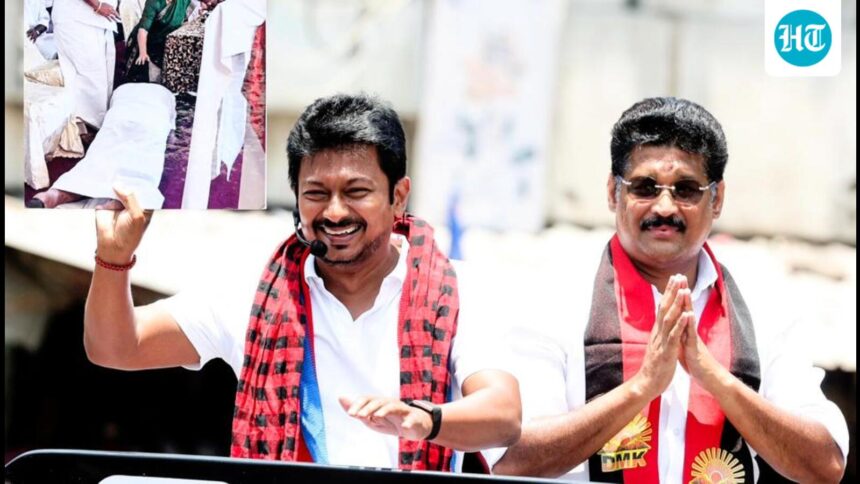
In Tamil Nadu too, the DMK-led MK Stalin has timed the cash distribution before the elections are announced.
Thamisarasi says she was surprised in January when she received her $5000 as immediate cash assistance to celebrate Pongal festival (the biggest festival in the state).
She receives a subsidized food ration every month and free electricity, and her daughters receive free medicines and nutritional supplements during their pregnancy. “My grandchildren are being provided free education, books and uniforms,” she added, admitting that such schemes have been in existence in the state for decades.
“Even Amma (former chief minister J Jayalalithaa of AIADMK) provided washing machines and mixer grinders for free.”
It is a testimony to the age-old ethos of welfare politics to attract voters, which is the hallmark of Dravidian politics.
In 1949, former Prime Minister CN Annadurai launched the DMK and prioritized sectors like education, healthcare and social welfare. Subsidized rice programs began in the 1960s.
After being expelled from the DMK by then Chief Minister M Karunanidhi in October 1972, actor MG Ramachandran launched the All India Anna Dravida Munnetra Kazhagam in 1972 and came to power in the 1977 elections, defeating the DMK.
M. G. Ramachandran, popularly known as MGR, strengthened and expanded the midday meal system at the primary level in 1982 (originally introduced by K. Kamaraj, Congress leader and former state chief minister) to encourage school enrollment and improve nutrition. The scheme was expanded to include urban areas in September 1982, and two years later, its coverage became global. He also started providing free electricity to farmers.
Upon his return to power in 1989, Karunanidhi, Prime Minister Stalin’s father, expanded the free electricity scheme to all poor people.
In 2006, he also distributed free color TVs under the “Kalaignar TV” brand.
Political analyst Mahesh Sethuraman added that Jayalalithaa named the welfare schemes after her. Many of the schemes bore the name Amma (Mother), as supporters referred to her. It launched Amma canteens offering subsidized food, Amma water, and distributed LPG cylinders, computers, blenders and even washing machines.
“If Kalaignar gave television, Amma distributed washing machines. With the introduction of such populist measures, Tamil Nadu can be considered a pioneer of freebie policy in India,” Sethuraman said.
Stalin continued this legacy, introducing free bus travel for women, the Kalaignyar Magalir Orimai Thugai Scheme, and the Buddhumai Ben Scheme providing $1000 for female students who studied from grades 6 to 12 in government schools.
According to 2025-26 budget documents approx $A whopping Rs 98,857 crore goes to social welfare schemes $Only Rs 13,807 crore has been allocated for the Kalaignar Magalir Urimai Thittam scheme. Debts of the country in which it stood $5,60,000 crore in 2021-22 rose to approx $9,52,374 lakh crore in 2025-26.
It is expected to be reached, Tamil Nadu Finance Minister Thangam Thenarasu said while presenting the interim budget $10,62,248 thousand crore for the period 2026-27. As a percentage of the country’s GDP, the debt is about 26.43 percent.
Despite high debt, Tamil Nadu fares much better than Madhya Pradesh, Uttar Pradesh, Maharashtra, West Bengal and Punjab in terms of its debt-to-GP ratio, a measure for assessing a state’s financial assistance, according to a Social Renewal Party legislative study.
Many of these schemes aim to reduce income inequality and improve living conditions, Sethuraman said. The question remains whether these schemes have achieved their goals even though studies show that income inequality in Tamil Nadu is lower than in some other states.
“Distributing such financial aid through borrowing would destroy the state’s public finances. Someone has to pay back the state exchequer,” political analyst Sumanth Raman warned.
To be sure, the present Union government has also promoted social welfare and cash grants.
Some of the central welfare and cash disbursement programs operating in Tamil Nadu include PM-Kisan Samman Nidhi which provides $6,000 per annum to farmers in three instalments, Pradhan Mantri Awas Yojana which provides financial assistance for construction of permanent houses among other things.
Multidimensional poverty in Tamil Nadu fell from 4.76% of the state’s population in 2015-16 to 1.43% in 2023 compared to the national decline from 24.85% to 11.28% during the same period, according to a NITI Aayog paper published in 2025.
The decrease in Maharashtra was from 14.80% to 5.48%, in Karnataka from 12.77% to 5.67%, in the increase from 37.64% to 17.40%, in West Bengal from 21.29% to 8.60%, and in Madhya Pradesh from 36.57% to 15.01%. To be sure, the 2023 figures are estimates based on the National Family Health Surveys conducted in 2015-2016 and 2019-2020.