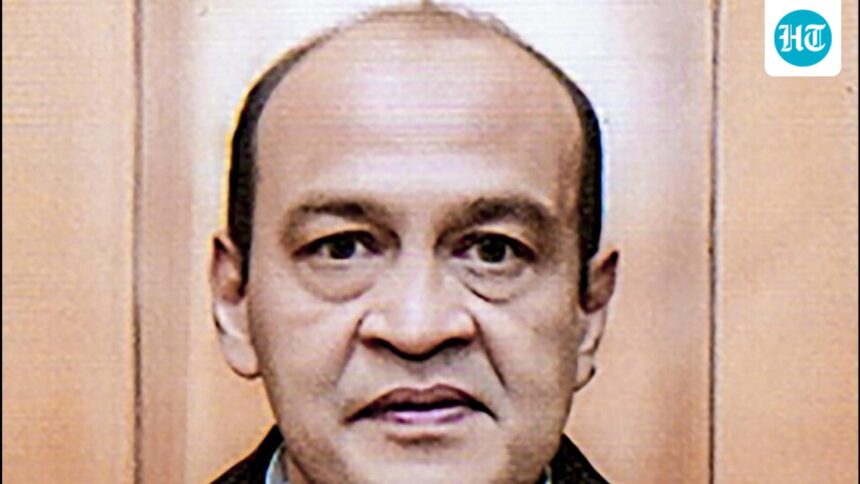
The resignation of Allahabad High Court judge Justice Yashwant Varma may have effectively halted the parliamentary impeachment process against him, but the probe committee constituted by the Lok Sabha is yet to formally close its proceedings and is expected to meet again on April 21, people familiar with the matter told HT on Sunday.

The committee is also likely to issue a formal response to Justice Varma’s strongly worded letter criticizing the investigation, even as the legal consequences of his resignation begin to unfold, the sources added.
“The proceedings have not been formally closed. The committee is scheduled to meet later this month and there may be a formal response to the judge’s letter,” one person familiar with the developments said. Another said that the committee might “register its position institutionally” before finalizing the matter.
Justice Varma submitted his resignation to President Draupadi Murmu on April 9, saying he would step down “with deep pain,” without elaborating. Chief Justice of India Surya Kant also informed on the same day.
The resignation came at a critical stage of the proceedings. Justice Varma was scheduled to begin his defense before the three-member panel between April 10 and April 14, after the prosecution concluded its arguments in March. The committee interviewed at least nine key witnesses. On April 10, she was not informed of his resignation until after the proceedings had begun.
The probe committee — comprising Supreme Court judge Justice Aravind Kumar, Chief Justice of Bombay High Court Shrikrishna Chandrashekar, and senior advocate PV Acharya — was set up by Lok Sabha Speaker Om Birla after a motion seeking Justice Varma’s removal was accepted in August 2025.
While the resignation renders impeachment proceedings under the Judges (Investigation) Act 1968 ineffective – since the mechanism only applies to a sitting judge – the committee’s work is not yet officially over. Proceedings under the law are conducted in secret, and any closure is expected to follow a formal internal process.
The case stems from allegations that burnt quantities of unaccounted cash were found at Justice Varma’s official residence in Delhi after a fire in March 2025, when he was a judge of the Delhi High Court. An internal Supreme Court committee found his explanation unsatisfactory, prompting CJI Sanjeev Khanna to recommend action.
Motions for removal were subsequently tabled in both Houses of Parliament in July 2025. While the Lok Sabha recognized the motion and conducted an inquiry, the Rajya Sabha rejected a parallel motion, citing procedural flaws.
In January, the Supreme Court paved the way for the investigation, rejecting Justice Varma’s appeal. A bench of Justices Dipankar Datta and Satish Chandra Sharma held that constitutional safeguards for judges cannot be used to “paralyze” the impeachment process and noted that the law provides adequate procedural protections.
Following the ruling, Justice Varma appeared before the committee on January 24, with multiple rounds of closed hearings thereafter. The process was briefly accelerated by the impending retirement of a committee member, but had to resume after a reconstitution in February.
In a separate 13-page letter sent on the day of his resignation, Justice Varma strongly criticized the investigation, alleging that it had been “characterised by unfairness from its inception”, relied on unreliable evidence and followed a “pre-determined” approach. He also pointed to the public defamation and said there was no evidence linking him to the alleged money.
He further claimed that he was denied a meaningful opportunity to defend himself, with key procedural safeguards relaxed or ignored, creating the impression that his guilt was presumed.
While resignation stops impeachment, it does not prevent criminal proceedings. Legal experts said that once a judge leaves office, a pretrial sanction is no longer needed, and agencies can act under ordinary criminal law if enough material emerges, although the order may require administrative approval from the ICJ and the president of the relevant high court.
Once the President accepts the resignation, Justice Varma ceases to hold office and the parliamentary impeachment process ends without any finding on the merits.
However, the Committee can still complete the formalities, including recording its response, before closing the matter.