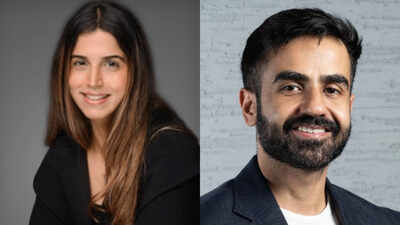
The Indian-origin MBA student who went viral for questioning Zerodha co-founder Nikhil Kamath has now spoken out, saying her views on education are shaped by privilege and life experience.Anahez Patel addressed the backlash and praise in a detailed LinkedIn post, three days after her exchange with Kamath at an Indian business conference sparked a nationwide debate about the value of business degrees.During the event, Patel directly challenged Kamath over his past statements criticizing MBA programmes. “A few months ago, you said that if you’re 25 and you get an MBA, you must be some kind of idiot,” she said, questioning the inconsistency of such a statement being made at a business school gathering.
The moment went viral.Commenting on this interest, Patel described growing up in a family where education was central. Her father is a marine engineer, her mother is a teacher, and her sister is a pediatric surgeon. Academics are “non-negotiable,” she said, along with a busy schedule of extracurricular activities such as debate, drama, music and academic competitions.Addressing assumptions about her background, she wrote: “I grew up with a degree of privilege, and nothing was excessive.”
She explained that access to knowledge is what defined her upbringing. “Books are never questioned,” she said, noting that even family vacations often include museum visits and learning experiences. She described herself as “very rich, in that sense of the term.”Patel also shared a personal example to explain her belief in education. Her family supported their home assistant in educating her daughters, one of whom now has an MBA and has moved on to a better life.
“So when I talk about education, it’s not abstract. I’ve seen first-hand what it can do,” she wrote.She defended her decision to question the billionaire. “I have a backbone, and I believe in using it,” she wrote. She criticized “intellectual politeness.” Patel argues that avoiding conflict does little to improve ideas.“Respectful disagreement (read that again, respectful), when grounded in logic, is how better thinking happens,” she added, crediting her upbringing with encouraging open conversations at home.