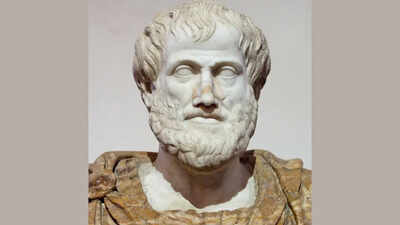
Quote of the day by Aristotle (Image source: Wikipedia)
Anger is a common feeling for people of all ages and in all situations. It happens all the time, like when people argue at home, disagree at work, have difficulty traveling, or even misunderstand each other.
Anger is a natural reaction for people, but the hard part is usually how to deal with it. When people feel hurt or disrespected, they often react immediately, and this reaction often leads to regret later. This is why the study of emotions and behavior has always been an important part of psychology and philosophy. Long before modern science came up with structured ideas about emotional intelligence, philosophers have long tried to figure out how emotions influence choices and relationships.
Aristotle was one of the most important thinkers in this field. His ideas about how people should behave are still often talked about today. He doesn’t say to hide anger; Instead, he says to point it in the right direction, at the right time, and for the right reason.
Today’s quote by Aristotle
“Anyone can get angry – that’s easy, but to be angry with the right person, to the right degree, at the right time, for the right purpose, in the right way – that’s not within everyone’s reach and it’s not easy.”
Meaning of quote by Aristotle in simple terms
Aristotle’s phrase means that anger is natural and easy for people, but dealing with it properly is very difficult. He says that anger is not bad or strange in itself.
Everyone goes through it in different situations. But the real challenge is controlling how this anger manifests.Aristotle believed that anger has meaning only when it is directed in the right way. This means that a person needs to know who is angry, how strong the reaction should be, when he should show it, what its purpose is, and how he should say it. If these things are not taken into consideration, anger may lead to quarrels, misunderstandings, or damaged relationships.His idea shows that controlling your emotions does not mean avoiding them; This means using them wisely. A person who can control his anger in a balanced way does not act without feelings, but rather with awareness and judgment. This difference is what makes emotional control a skill and not an instinct.
Why does Aristotle’s idea remain relevant in everyday life?
In today’s world, there are many things that can make people angry, and they are often unavoidable. This can happen at work due to stress, in personal relationships due to misunderstanding, or in public due to stress and anger.
In many cases, people react quickly without thinking about it first.In such situations, Aristotle’s observation is important because it makes people stop and think before responding. A short pause between feeling something and acting on it can completely change the outcome of a situation. It can help people understand each other better and clarify things instead of making things worse.His idea also shows how important it is to be aware of your feelings.
People who know how they feel are often better at saying what they want to say without damaging relationships or making things more tense than they need to be.
Understanding emotional control after repression
A common misconception regarding anger management is that it involves suppressing emotions. But Aristotle’s view does not support repression. Instead, it focuses on how to get there and how to stay there.Sometimes, holding in anger can lead to internal tension or emotional outbursts later.
On the other hand, controlled expression allows a person to talk about problems clearly while keeping things balanced.This method states that you should not ignore your feelings. It must be understood and expressed in an organized manner so that it does more good than harm.
The importance of timing and judgment in emotional responses
Timing is one of the key ideas in what Aristotle said. The same feeling can have completely different effects when it appears at different times. When you’re angry, saying something right away can make things worse, but when you think about it first, you can understand better.Judgment is also very important. Not every situation requires the same level of emotional reaction. Some problems are small and do not require strong reactions, while others may require clear communication. Being emotionally mature means knowing that difference.Aristotle’s idea is that emotional intelligence is knowing how to respond to a situation rather than always responding in the same way.
Relevance in today’s social and professional environment
In today’s fast-paced world, people can talk to each other instantly, and misunderstandings can spread quickly.
Stress at work, digital communication, and social interactions can lead to situations where emotions are running high.In this kind of context, Aristotle’s idea becomes more important. Controlling your emotions helps you maintain professional relationships, work better with others, and avoid unnecessary fights. In interpersonal relationships, balanced reactions also help people trust and understand each other.Modern psychology also supports similar ideas, saying that the ability to control your emotions is an important part of mental health and getting along with others.
Other famous sayings of Aristotle
- “Knowing yourself is the beginning of all wisdom.”
- “We are what we do over and over again. Excellence is not an act, but a habit.”
- “Patience is bitter, but its fruit is sweet.”
- “It is the mark of an educated mind to be able to entertain an idea without accepting it.”
- “The educated differs from the uneducated as much as the living differs from the dead.”
Aristotle’s perspective on anger explains human emotions and their importance in everyday life. His explanation makes it clear that anger is not the problem; It’s how you show it that matters. To control your emotions, you need to be aware of them, know when to act, and think carefully about what you are doing. In your personal and professional life, it is better to understand the situation and respond appropriately rather than act impulsively.
His idea is still important today because it shows a universal part of human behavior that has not changed over time.