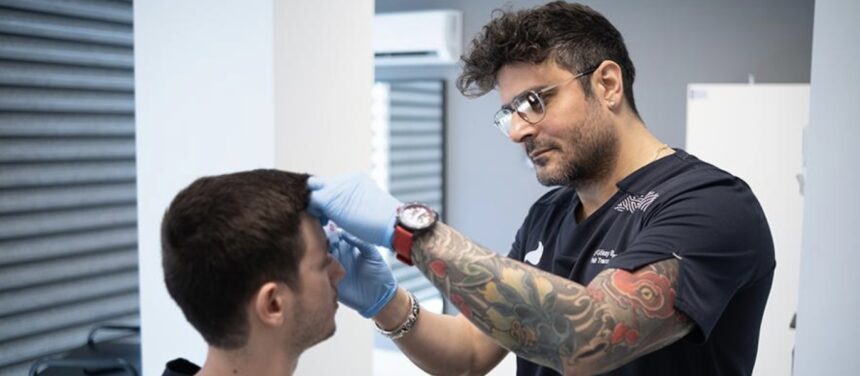

Walk around almost any major district in Istanbul, and you’ll notice the same thing: a city that works fast, stays open late, and somehow still makes room for personal renovations. For many visitors, this renewal is hair restoration. A Hair transplantation in Türkiye It can provide a potential path toward clear improvement with fewer unknowns, especially when careful research is done about choosing a clinic and understanding what to expect.

This guide provides an overview of hair transplant procedures, including how the procedures work, what the leading techniques involve, what to expect during the recovery period, and how to look at glossy before-and-after photos when choosing a clinic. You will also find a transparent price comparison table and an introduction to Smile Hair Clinic for readers considering treatment in Istanbul.
What is the hair transplant process?
Hair transplantation is a minor surgical procedure that transfers healthy hair follicles – usually from the back and sides of the scalp (the “donor area”) – to areas where there is thinning or baldness (the “recipient area”). These donor follicles are usually resistant to the hormones associated with pattern hair loss, which is why the transplanted hair can be long-lasting.
Modern hair transplantation is not about ‘connected’ rows anymore. A quality procedure tends to focus on natural hairline design, the proper angle and direction for each graft, and realistic density that respects your donor supply. In other words, it may be less about adding hair and more about thoughtfully redistributing what’s already there with long-term results in mind.
Why do many patients choose Türkiye for hair restoration?
Türkiye’s reputation did not come by chance. Istanbul, in particular, has built a medical ecosystem around hair restoration: specialized clinics, experienced surgical teams, streamlined patient logistics, and a service model designed for international visitors.
However, it is important to separate the “popular destination” from the “safe choice”. The clinic you choose is as important as the country. Results can look great when planning is meticulous and execution consistent, and disappointing when things are cut short.
The main techniques you’ll hear about: FUE, Sapphire FUE, and DHI
Most clinics in Türkiye focus on FUE-based methods. Here’s what these terms usually mean:
- FUE (Follicular Unit Extraction): Individual follicular units are extracted from the donor area and transplanted into the recipient area. It is widely used because it avoids the linear strip scar and allows flexible graft placement.
- Sapphire FUE: A form of the FUE technique where sapphire blades are used to create recipient sites (small channels/incisions into which the grafts are placed). Clinics often position Sapphire FUE as a technique aimed at creating precise, clean channels, which may support dense packing where appropriate.
- DHI (Direct Hair Transplantation): It is often described as an implantation method that uses a pen-like implanter (commonly associated with a “Choi pen”) to place the grafts. Clinics may recommend its use for certain hairline details or when minimal shaving is preferred, depending on the case.
The names of the technologies may seem crucial, but the most important question is: Who plans your hair, who opens the channels, who places the grafts – and how cohesive is the team?
Who is a good candidate?
The consultation should cover more than just the “number of grafts”. Strong candidates usually have the following:
- Stable or predictable hair loss patterns (or a long-term plan if the loss is persistent)
- Adequate donor density
- Realistic expectations about density and coverage
- Healthy scalp condition and ability to follow up with aftercare
If your donor area is weak, the clinic should say so clearly. Overharvesting can lead to permanent thinning of the donor area that is difficult to repair.
Day of procedure: What usually happens
Most hair transplant days follow a similar rhythm:
- Design and planning: Hairline and density plan, donor evaluation, and target range for vaccination.
- to prepare: Shaving (if necessary), anesthesia, and zoning.
- extraction: The grafts are harvested from the donor area.
- Open channel (create recipient location): The receiving area is ready.
- planting: The grafts are placed with attention to angle and direction.
The Microclinic treats these steps as if they were a series of quality checks, not a production line.
Recovery: Timeline People don’t talk about it enough
Recovery is usually easy, but it requires patience.
- Days 1-3: Swelling may occur, especially around the forehead. Sleeping position is important.
- Days 4-10: Crusts form and then fall off gradually. Washing instructions.
- Weeks 2-8: “Shock loss” is common, as the transplanted hair can fall out before regrowth begins.
- Months 3-6: Visible regrowth usually begins to appear meaningful.
- Months 9-12 (sometimes longer): The results are ripe. Texture and density often improve.
Choosing a Clinic: A Quick Reality Check
When comparing clinics in Türkiye, look for signs of medical accountability:
- Clinician-led planning (not just a coordinator)
- A clear explanation of the technique and why it works for you
- Transparent graft estimates (taking into account donor retention)
- Hygiene standards, documented follow-up and accessible aftercare support
- Consistent photographic documentation (similar lighting/angles)
Also ask directly what is included in the package: consultations, medications, hotel/transportation, aftercare tools, and follow-up schedule. Vague answers are a red flag.
______________________________________________________________
Highlight: Smile Hair Clinic in Istanbul
Smile Hair Clinic is based in Istanbul and was established in 2016 2018 By doctors Dr. Mehmet Erdogan and Dr. Gokay Bilginfocusing on advanced FUE techniques and structured patient care.
One highlight of the clinic is A Physician-led modelexplaining that operations are performed by doctors and the medical team, with post-operative planning and control integrated into the process.
Smile Hair Clinic also observes international standards of patient care through TEMOS International Healthcare Accreditationwhich evaluates areas such as international patient management, clinical quality, safety protocols, and continuity of care.
In practice, what many patients want from a clinic like this is consistency: the same meticulous approach from drawing the first hairline to placing the final graft, plus a follow-up path that doesn’t disappear once they go home.
______________________________________________________________
Price Comparison: Türkiye vs. Other Countries (Typical Ranges)
Costs depend on the number of grafts, the technique, the clinic, and what is included. The table below reflects publicly available ranges from consumer medical sources and clinic pricing pages – use it as a starting point, not a quote.
| Country/destination | Typical total cost (one session) | What the price often covers |
|---|---|---|
| Türkiye (Istanbul) | 2000 – 5000 euros (often as packages) | Procedure + usually hotel/transport/aftercare in bundled offers |
| US | $4,000 – $15,000 | Pricing for procedures varies depending on the number of grafts/clinic; Usually not bundled |
| UK | ~£1,995 – £15,000 (Wide range; average quoted around £4,820) | Usually action-focused pricing; Packages vary |
| Germany | ~ 4000 – 8000 euros (common domain cited) | Pricing is usually based on procedure only; Add-ons can raise the total |
| Canada | 7,000 CAD – 21,000 CAD (varies by province) | Pricing can be customized Only procedures are common; Taxes may apply |
| Australia | AUD 8,000 – USD 20,000+ | Pricing is usually based on procedure only; Costs vary depending on the size of the case and the clinic |
A quick note on pricing: “Cheap” is not automatically a bargain in surgery. What you want is Transparent planning + safe implementation + reliable aftercareBecause repairs are emotionally and financially expensive.
Travel planning tips (that people want to know in advance)
- Give yourself time. Arrive at least one day before the procedure if possible, especially after long flights.
- Avoid rushing the post-operative days. The first wash and checks are important.
- Ask about follow-up support. You want a clinic that will remain responsive after you go home.
- Don’t ignore the basics. Sleeping position, washing instructions and sun protection can make a real difference.
This article is for informational purposes only and does not replace professional medical advice. If you are seeking medical advice, diagnosis or treatment, please consult a medical professional or health care provider. Prices and availability are accurate as of the time of publication and are subject to change without notice. Please check the retailer’s website for the latest pricing information.