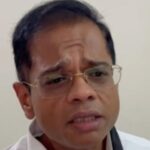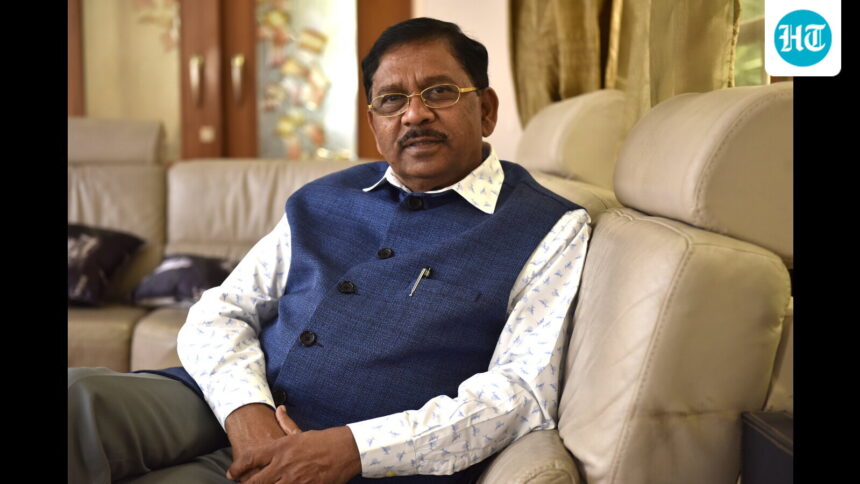
Population alone should not decide the redrawing of the Assembly and Lok Sabha constituencies, Karnataka Home Minister G Parameshwara said on Monday, warning that such an approach could hurt states that have stabilized population growth.

Speaking to reporters, he pointed to Karnataka’s potential stake in the future delimitation exercise, suggesting that the state may end up with fewer Lok Sabha seats compared to northern states where population growth has been higher.
“North India has a larger population, which is why we are getting fewer seats. Our worry is that this does not happen,” he said, adding that relying solely on population as a criterion would not reflect the efforts being made by the southern states in implementing family planning measures.
Supporting Chief Minister Siddaramaiah’s stand, Parameshwara said: “CM Siddaramaiah has urged not to use population as a criterion. In South India, we have implemented family planning effectively, which has led to a decline in our population. This should not become a disadvantage. His statement is correct.”
These statements come amid renewed controversy over the demarcation of borders, which is expected after the current freeze on the allocation of Lok Sabha seats, in place since the 1970s, will be lifted after the next population census. The freeze ensured that states experiencing slow population growth would not lose representation, but a new practice could change that balance.
Siddaramaiah had on Sunday questioned the Centre’s approach and the timing of Prime Minister Narendra Modi’s statements on the issue, suggesting that the discussion had political undertones.
“I welcome Prime Minister Narendra Modi who has finally opened his mouth on the proposed delimitation exercise. This sudden interest in ‘reassurance’ of southern states looks less like statesmanship and more like election-driven messaging, which is well timed with political calculations in states like Kerala and Tamil Nadu,” he said.
He stressed that the discussion is not about increasing the total number of seats, but rather about how to distribute them. “Let us be clear: the issue was never about whether the number of Lok Sabha seats in the southern states would increase. The concern is about how they will be increased – and who benefits disproportionately,” he said.
Siddaramaiah also outlined potential shifts under the population-based model, noting that northern states could see greater gains. Uttar Pradesh’s representation could rise from 80 to 120 seats, Maharashtra from 48 to 72 seats, and Bihar from 40 to 60 seats, while Karnataka’s representation may rise more modestly from 28 to 42 seats.
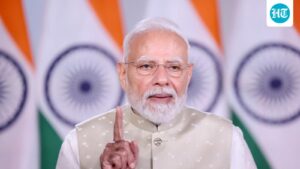
Addressing a rally in Thiruvalla in Kerala on Saturday, the Prime Minister promised that the number of constituencies in state assemblies or Lok Sabha would not decrease in the southern states.
“In states like Kerala, Tamil Nadu, Andhra Pradesh and others, which have done well in tackling overpopulation, we are ensuring that the number of Lok Sabha seats will not be reduced. The seats reserved for women will be additional seats. We have invited Congress leaders for a meeting on this and hope they will listen to us,” he said.
Separately, Parameshwara addressed the controversy over language policy in schools, including opposition to making Hindi compulsory for Class 10 exams. He said that resistance to Indian imposition has a long history in the region.
“Even during my student days, we had to raise slogans like ‘Down with Hindi’. This confusion has continued since then,” he said, adding that the issue requires a balanced solution that ensures space for regional languages.
On the political front, Parameshwara expressed confidence ahead of the upcoming by-elections in two constituencies, citing support for the government’s social welfare programmes.
“Since this is a by-election, the social justice programs implemented by the government over the past three years will yield results,” he said.
He also responded to questions related to internal reservation among the scheduled castes, saying that his previous statements were aimed at highlighting the contradictions in the decisions taken by the previous government.
“Who created the confusion regarding internal reservation? My statement was issued in this context. The Sadashiva Committee report was rejected, and subsequent ratios were added before sending it to Delhi. On what basis were these ratios determined? My statement was issued in response to the confusion created by the BJP,” he said.
The state’s interior minister added: “Did we ever announce that we would withdraw or not implement the internal reservation? We have always stressed that we are committed to implementing it.”