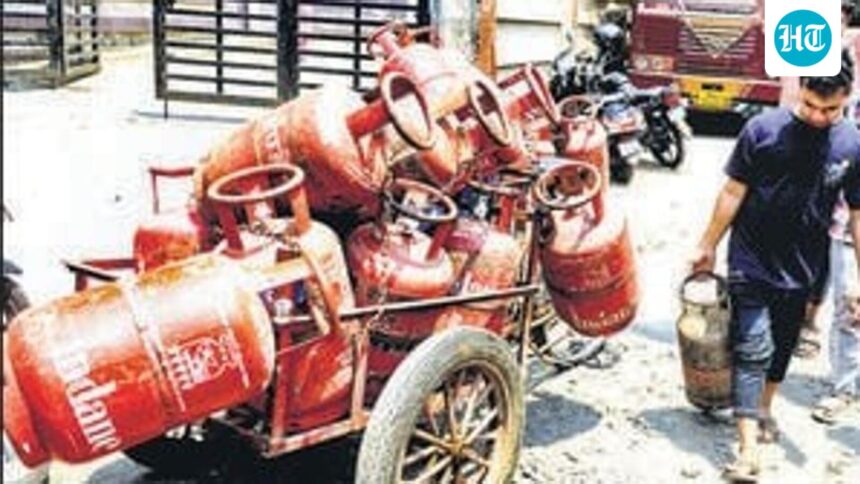
The government is taking several measures to reduce India’s dependence on imported liquefied petroleum gas (LPG) and enhance energy security in the medium to long term, including prioritizing pipelined natural gas (PNG) and developing renewable energy such as solar, wind, bioenergy and green hydrogen, Minister of State for Environment Suresh Gopi informed Lok Sabha on Thursday.

He said India imports about 60% of its LPG needs, with nearly 90% of supplies passing through the Strait of Hormuz, making the country vulnerable to unrest.
As part of immediate measures, the government directed refiners to direct their main hydrocarbon flows exclusively towards LPG production, increasing domestic production by 40%. At the same time, public sector oil marketing companies have secured contracts to import 2.2 million metric tons of LPG from the US in 2026 – about 10% of India’s import requirements – marking a shift away from traditional Gulf suppliers.
To ease supply pressures, the center is also strengthening PNG connections to commercial enterprises and promoting clean energy sources, including solar, wind, bioenergy and green hydrogen, along with ethanol blending and efficiency measures.
Gopi was responding to Rajya Sabha MP Amar Singh’s questions on: (i) whether the government has assessed the impact of global energy supply disruptions and geopolitical tensions in West Asia on LPG imports and domestic availability in the country and, if so, the details thereof; (2) Details of initiatives taken by the Government to manage LPG supply chains, including measures to promote local production and regulate distribution among consumer groups; and (3) proposed initiatives to enhance the resilience of LPG supplies in the country and prevent similar shortages in the future.
In the short term, in order to boost domestic production of LPG for existing use, the Center on March 9 issued directions to all oil refining companies, including petrochemical complexes, that the total production of C3 and C4 hydrocarbon streams – such as propane, butane, propylene and butene – be used exclusively for LPG production and supplied only to public sector oil marketing companies. Moreover, refiners have also been instructed not to divert these flows for manufacturing petrochemical products or any by-products, Gopi said.
Oil Marketing Companies (OMCs) have been directed to ensure that the LPG produced is supplied exclusively to domestic LPG consumers. As a result of these initiatives, domestic LPG production has increased by 40%. While domestic LPG supplies were prioritized, commercial LPG supplies were initially affected. Subsequently, the government restored partial supplies of 20% to commercial consumers, which was further enhanced to a total allocation of 50%, including 10% linked to Papua New Guinea’s expansion reforms, Jobe explained.
This allocation has been prioritized for key sectors like restaurants, dhabas, hotels, industrial canteens, food and dairy processing units, subsidized canteens run by state governments or local bodies, community kitchens, and 5 kg Free Trade Liquefied Petroleum Gas (FTL) cylinders for migrant workers.
“India imports about 60% of its LPG consumption, of which about 90% passes through the Strait of Hormuz. Given the ongoing geopolitical developments in West Asia, the availability of imported LPG in the country has been affected. The government has taken a series of proactive measures to ensure stability in LPG supply. These measures include prioritizing domestic consumption of LPG, diversification of import sources, dynamic inventory management, and inter-regional allocation to handle local products,” Gopi said. “lack”.
Moreover, the Center has also advised city gas distribution (CGD) entities to prioritize provision of piped natural gas (PNG) connections to commercial establishments such as restaurants, hotels and canteens across permissible geographical areas, with a view to addressing concerns regarding commercial LPG availability.
“The government has asked all central government ministries/departments to conduct a comprehensive assessment of the potential demand for PNG communications in establishments under their jurisdiction, and appoint a nodal officer in each ministry/department to coordinate this process. As per the above directives, the Petroleum and Explosives Safety Organization (PESO) has instructed all its offices to prioritize CGD-related requests and ensure they are disposed of within 10 days of receipt,” Gopi said, adding that the Center is also working on promoting alternative fuels by increasing the share Natural gas in the energy mix. “In addition, emphasis is being placed on developing renewable energy, including solar, wind, bioenergy and green hydrogen, along with implementing energy efficiency measures across sectors. Blending of ethanol and other biofuels is also being promoted to reduce dependence on imports and enhance energy sustainability,” he added.
“Strategically, diversification of LPG imports is being pursued to ensure security of supply and mitigate risks arising from regional disruptions or geopolitical events. As part of this strategy, LPG market management companies recently entered into contracts to import approximately 2.2 million metric tons (MMT) of US origin LPG for calendar year 2026, covering approximately 10% of the country’s total LPG import requirements. This represents an important step in enhancing the resilience of India in the field of energy by creating a reliable alternative source of LPG supplies outside the traditional Arabian Gulf region, he added.