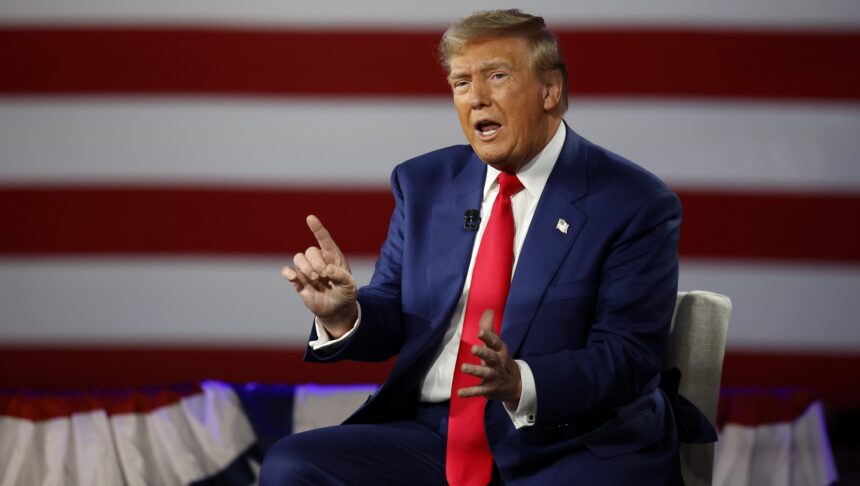

president Donald Trump He has pushed ahead with his effort to end birthright citizenship as part of his second-term agenda, drawing sharp criticism and igniting a fierce legal battle. on December 8, 2024, he told NBC Christine Welker on Learn about journalism He intends to issue an executive order ending birthright citizenship in the United States.
As of April 2026, it has Supreme Court of the United States He hears arguments about this policy, which challenge long-standing interpretations of the Fourteenth Amendment. This case could determine whether children born in the United States to certain noncitizen parents will automatically receive citizenship.
Find out what birthright citizenship means, whether Trump has the authority to make this change, and who could be affected if it goes into effect.
What is the meaning of born citizenship?
Birthright citizenship is the legal principle that grants automatic citizenship to any child born on the territory of a country, regardless of the citizenship of his or her parents or their immigration status. In the United States, this principle is enshrined in the Fourteenth Amendment to the US Constitution, which states:
“All persons born or naturalized in the United States, and subject to the jurisdiction thereof, are citizens of the United States and of the state in which they reside.”
This means that any child born on US soil, whether his or her parents are citizens, legal residents, or illegal immigrants, automatically acquires US citizenship at birth.
Can Trump end birthright citizenship?
Trump has stated that he still intends to end birthright citizenship, a goal he previously listed as a priority on his first day in office. In December 2024, he said he intended to do so through executive action, though he did not provide specific details on how the change would be implemented or enforced.
In June 2025, the US Supreme Court issued a ruling limiting the power of lower courts to block Trump’s executive order, giving his administration greater latitude to pursue restrictions on birthright citizenship as legal challenges continue.
To formally amend the 14th Amendment, it would require a two-thirds majority vote in both the House and Senate, followed by ratification by three-quarters of state legislatures — a process seen as highly unlikely despite Republican control of Congress.
Who will be affected by the change?
If Trump ends birthright citizenship, it will primarily affect:
- Children born to illegal immigrants: The most direct impact will be on children born in the United States to illegal immigrants. Currently, these children automatically receive US citizenship under the Fourteenth Amendment. Without birthright citizenship, they will not receive citizenship at birth.
- Children born to temporary residents or tourists: If birthright citizenship is revoked, children born to noncitizen parents, such as tourists, diplomats, or temporary workers, could also be denied automatic citizenship, despite being born on U.S. soil.
- Children of immigrants born in the United States who are seeking citizenship: Immigrant families may face increased challenges in securing citizenship or legal status for their children, especially in cases where the parents are not U.S. citizens or lawful permanent residents.