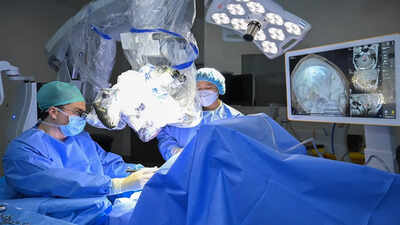
UAE facilitates healthcare licensing and allows academic doctors to treat patients / Image: file
The UAE has introduced comprehensive new rules aimed at strengthening the healthcare workforce, allowing university faculty members to practice in hospitals while facilitating licensing procedures for new graduates.
Health authorities at the federal and emirate levels led this decision, which is expected to bridge long-standing gaps between academic training and real-world clinical practice.Officials from the Ministry of Health and Community Protection, along with regulators such as the Department of Health, Abu Dhabi and the Dubai Health Authority, said the reforms aim to improve standards of patient care while accelerating the entry of qualified professionals into the system.
The UAE allows colleges to practice the profession in hospitals
Under the newly approved framework, faculty from accredited schools of medicine, dentistry, pharmacy and allied health can now assume clinical roles in licensed health care facilities while continuing their teaching responsibilities.The authorities said that this step will link classrooms directly to hospitals, ensuring that students are trained by specialists who are actively practicing the profession.Health officials noted that the reform:
- Promotes practical and hands-on medical education
- Keeps faculty up-to-date on the latest treatment protocols
- Improves patient outcomes through academic-clinical collaboration
This represents a shift from previous regulations, which restricted many faculty members to academic roles unless they were separately licensed under more stringent pathways.
Licensing reforms for health graduates
In a parallel move, the UAE has simplified licensing procedures for new graduates from accredited institutions, significantly reducing the time needed to start practicing the profession.According to officials from the Ministry of Health and Community Protection, the updated system improves coordination between universities and licensing authorities, ensuring a smoother transition from education to work.
The focus is on reducing delays that have previously slowed entry into the workforce, especially for young doctors, nurses and allied health professionals.The reforms streamline documentation and verification processes, shorten approval wait times, and create clearer paths from internships to full-time roles. Authorities say these changes come at a critical time, as demand for healthcare professionals continues to rise across the country.
Transformation of the healthcare sector in the UAE
The authorities have described the policy as a structural upgrade that will reshape how healthcare talent is trained, deployed and retained across the UAE.By integrating academic learning with practical clinical practice, the reform aims to bridge the long-standing gap between theory and real-world patient care. Officials say this will help build a more skilled and work-ready workforce while encouraging research-based treatment and innovation within hospitals.The move is also expected to boost patients’ confidence, as medical professionals will gain deeper practical experience during their training. At the same time, this is in line with the UAE’s broader ambition to position itself as a global healthcare hub capable of attracting first-class medical talent and expertise.
High medical demand
The UAE’s healthcare sector has expanded rapidly over the past decade, driven by population growth, medical tourism, and continued government investment in world-class infrastructure.Today, the country employs tens of thousands of licensed health care professionals in various specialties, including doctors, nurses, and technical staff. Major centers such as Dubai and Abu Dhabi continue to see the opening of new hospitals, specialist clinics and research facilities.Despite this growth, authorities acknowledge that delays in licensing and gaps in workforce readiness remain persistent challenges.
Recent reforms address these bottlenecks head-on, ensuring qualified professionals are able to enter the system faster without compromising quality.
Looking forward
While the reforms are facilitating entry and expanding professional roles, regulators have made clear that standards will not be relaxed.The Ministry of Health and Community Protection stressed that all practitioners, whether faculty members or recent graduates, must continue to meet stringent competency, qualification and licensing requirements before treating patients.Officials stressed that the goal is not to ease regulations, but rather to remove inefficiencies and modernize the system, ensuring that the UAE’s healthcare sector remains competitive and compatible with global standards.