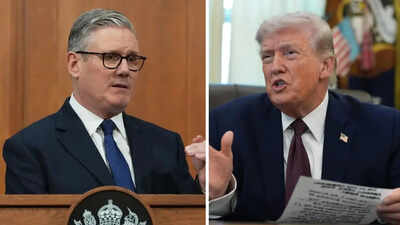
UK Prime Minister Keir Starmer confirmed on Wednesday that Britain will not be drawn into the conflict in the Middle East, stressing that “this is not our war” and that joining it “is not in our national interest.”Amid growing concerns about global energy supplies, Starmer announced that the UK will host a meeting of around 35 countries later this week to discuss reopening the strategic Strait of Hormuz.He said during a Downing Street press conference that the meeting “will assess all viable diplomatic and political measures we can take to restore freedom of navigation, ensure the safety of stranded ships and sailors and resume the movement of vital goods.” He said that British Foreign Secretary Yvette Cooper would host the discussions. He added that the initiative aims to bring countries together to push “as one team for maritime security across the Gulf.”Starmer said that after the talks, military planners would meet “to consider how we can organize our capabilities and make the Strait of Hormuz accessible and secure after the fighting stops.”
“This is not our war”
Emphasizing Britain’s position, Starmer said, “This is not our war,” and stressed that the United Kingdom would not be drawn into the conflict “because that is not in our national interest.”
He said: “No matter the pressure on me and others, and no matter the noise, I will work for the British national interest in all the decisions I make, and for this reason I was absolutely clear that this is not our war, otherwise we will not be drawn into it,” in a clear reference to the statements of US President Donald Trump.
Starmer said the UK was actively continuing diplomatic efforts to ease tensions and reopen key trade routes.
“To this end, we are exploring all diplomatic avenues available to us,” he said.Highlighting ongoing engagements, he noted that British officials have already held discussions with G7 partners and regional allies, adding that the UK has brought together 35 countries around a joint “statement of intent” on maritime security.
War to influence the economy
Starmer warned of wider consequences, saying the conflict would “affect the future of our country”, but insisted that Britain was prepared to deal with the economic fallout.“No matter how strong this storm is, we are in a good position to weather it,” he added.Addressing concerns about the rising cost of living, he added: “The most effective way we can support the cost of living in Britain is to push for de-escalation in the Middle East and to reopen the Strait of Hormuz, which is a vital energy route.”
The UK is fully committed to NATO
Responding to speculation about the US commitment to NATO, Starmer said the alliance remains crucial.“NATO is the most effective military alliance the world has ever seen and has kept us safe for many decades,” he said, adding that the UK remained “fully committed to NATO” after Trump told The Telegraph that the alliance was a “paper tiger.”These statements come as the escalating conflict continues to disrupt global energy markets, especially through the Strait of Hormuz, a major artery for oil shipments.Echoing similar concerns, Australian Prime Minister Anthony Albanese earlier warned that “the coming months may not be easy” as governments brace for long-term economic pressure due to supply disruptions.“The coming months may not be easy. I want to be frank about that. No government can promise to eliminate the pressures caused by this war,” Albanese said, adding that Australia would take steps to protect its economy.