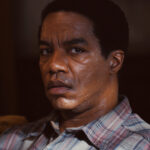
In his review of New York Times“, critic Vincent Canby wrote about Sidney Lumet Afternoon dog day“If you can let yourself laugh at the despair that has turned into dangerous madness, the film is funny, but mostly journalistically effective and lively, in the understated way of writing news that eschews speculation.” He’s right, of course: Lumet’s 1975 masterpiece is, at times, woefully entertaining, the tics and foibles of ordinary life incongruously interrupting a far more serious and extraordinary situation.
However, for the most part, Afternoon dog day It is a sober thriller (which Canby called a melodrama) about a small Brooklyn bank robbery that turns into a city-wide hostage crisis and magic, about a man deeply abused by the system, who almost breaks free for a few glorious and dangerous hours by bending that system to his will. There are a lot of serious things going on in the film, including considering the fraught mood of its fraught times. She cracks instantly, and whines with great sadness.
But the creators behind the new Broadway production Afternoon dog day She seems to have gotten stuck on the funny part. This film is based on Pulitzer Prize-winning playwright Stephen Adly Guirgis Dog day It is an anti-comedy of whiners, curious people and freaks, of bad jokes and weak attempts at rabble-rousing. It’s a depressing picture, as Guergis and everyone involved in this intimate neo-realistic foolishness of Lumet’s film watch and say, “Let’s turn this into a big Broadway farce.”
There were reportedly some clashes over the tone during production; the times It is reported that Girgis was banned from entering the training room for some time. Which may indicate that at some point in the run-up to the previews he implied that maybe not everything in this true story should be a joke. But the production pushed forward anyway, and what resulted was a garish disaster of tone and rhythm, at once boring and annoying.
Perhaps the first sign that something is wrong comes at the beginning, when a secondary character, a timid would-be third-party perpetrator, Ray Ray, declares that he does not have the fortitude to continue the robbery. In the film, gang leader Sonny (then Al Pacino, now Jon Bernthal) simply sighs and lets him go. Which eventually happens on stage as well, but not before Ray Ray loudly complains of stomach problems and then promptly soils himself. I think we were supposed to laugh at this pathetic display – look at these idiots, almost literally peeing the bed – rather than see, as we do in the film, the fragile humanity of those who are about to be portrayed by the media and the police as promiscuous animals.
Such cheap comedies abound as the play develops. The chief police negotiator’s last name was changed to Fucco, perhaps just so the vaunted FBI agent could repeatedly call him “Fucko.” The bank teller characters—women of varying ages who fear for their lives while warily bonding with their captors—are transformed into satirical sitcom mothers or matriarchs. Sal, the more modern and less predictable thief played coolly by John Cazale in the film, is transformed in 2026 into a dumb locker case and a loose cannon by BearEbon Moss-Bachrach, doing a tired show of his character from this show. As I sat during the play, I kept thinking to myself, “Wait; He is This is what the movie looks like?” And then I watched the movie again, and I can confidently say, no, of course it’s not like that at all.
Guirguis would seem like a natural choice for a film adaptation. His best plays – Jesus jumped the A train., Between Riverside and Majnun – are vivid portraits of difficult New Yorkers, many of them caught up in crime and its consequences. He can oscillate between kitchen sink drama and poetic comedic fugue with surprising ease. It’s certainly very rooted in the language of the city it’s located in the middle of Dog daycould find a way to parlay Lumet’s minimalist approach into something that might fill a Broadway house proportionately. But his instincts failed him badly here. What’s worse is that he seems very angry at the people in this story, often mocking them when empathy would be much more effective.
The way Guirguis treats Sonny’s second wife, Leon – a trans woman who has just attempted suicide – is particularly disgusting. It’s OK that a film from 50 years ago is far more sensitive to Sonny and Leon’s complex relationship than a play produced in the present day. Girgis Leon (played by Esteban Andres Cruz) is portrayed as a reckless, feisty, man-crazy sex worker. It’s all just a big gag, another piece of idiocy to join in on the rest – like, say, risqué jokes about how a bank teller is supposed to see… deep throat With her husband, or how another woman sleeps with her stressed boss. (I probably don’t need to remind you, but none of that is in the movie.) Girgis is practically begging us not to take anyone seriously, for a reason I cannot understand.
Director Rupert Goold is ill-suited to mitigate this satirical impulse. Gould has done good things on stage (King Charles IIIamong others) and decent things in the movie (Judyfor which Renée Zellweger won her second Academy Award), but this particular milieu does not favor any of his talents. The action sequences, if we can call them that, are a clichéd and noisy hodgepodge. There is not an ounce of tension to be found during the entirety of this supposedly heated confrontation. Gould doesn’t do much with David Korens’ impressive realistic set, but he rotates it back and forth depending on whether we’re inside or outside the bank. He directed most of his actors to the widest performances, preferring high pitch and volume over anything that might resemble the measured authenticity of Lumet’s set.
Bernthal registers, at times, as a real human being caught in a moment of despair. He maintains a vibrant energy even when the play around him declines. Jessica Hecht, as head cashier Colleen, combats her mistakes with noble grace; She finds ways to turn canned articles into something resembling everyday life. John Ortiz gives Foucault (sigh) a certain air of propriety that vaguely evokes Charles Durning’s gorgeous shag in the film. Honestly, though, I was very drawn to Spencer Garrett mad men Fame, which features the catchy, clear tone of an FBI man brought in to fix the chaos in the NYPD. He really feels the time and place of the story, whereas most of the others play to a studio audience.
This audience has become complicit in this production’s most serious crimes. Gould chose to turn “Attica! Attica!” A moment in the film – in which Sonny revels in a frenzy of anti-authority sentiment – led to little audience engagement. Bernthal takes center stage, waving his arms and asking those in attendance to repeat “Attica!” And his applause (or perhaps echo) when he says “Fuck you, NYPD!” I don’t know that Broadway audiences (particularly at the concert I attended) are exactly the right group to try to influence such public displays of mayhem, and so the moment becomes painfully weak and awkward.
But more importantly, this frantic call-and-response completely upends what makes the moment in the film so exciting. Yes, Sonny has already begun his Attica chant—evoking the brutal suppression of the prison uprising of the previous year—but he is reacting to the already existing enthusiasm of those gathered around the bank to motivate Sonny to offer their proletarian support. Lumet depicts a sick city teeming with tension, its citizens angry at corrupt police and corrupt politicians, and demanding to assert their humanity in the face of man. It is an exciting, spontaneous and tragically fleeting wave of revolutionary cry.
But on Broadway, Afternoon dog day Attempts to force spectators rather than earn them, turning Sony’s cries of reckless heroism into a hollow marketing slogan completely devoid of context. Maybe some theatergoers will put down their $30 cocktails to applaud and cheer F, and they immediately decide to buy “Attica! Attica! Attica!” He carried the bag into the hallway on their way out, happy to have it Dog day expertise. But Sony in the movie would surely be horrified to see such a thing. I think the hostages will be too.
Location: August Wilson Theater, New York
Cast: Jon Bernthal, Ebon Moss-Bachrach, Jessica Hecht, John Ortiz
Director: Rupert Goold
Writer: Stephen Adly Girgis
Set design: David Korins
Costume design: Brenda Abandandolo
Lighting design: Isabella Bird
Sound Design: Cody Spencer