But space travel is not as easy as it seems. The human body is not designed to function properly outside of Earth’s gravity. Muscles atrophy, bones become less dense, and walking becomes an exercise.
Space travel is not easy, especially when planning to travel to Mars. One thing that scientists are struggling to achieve is how to keep astronauts physically fit. Surprisingly, the solution to this mystery was found with tiny space-traveling mice. Recent studies on the International Space Station (ISS) have provided new information about muscles, gravity, and exercise. This information could change the future of space travel for humans.
How mice help NASA understand space fitness
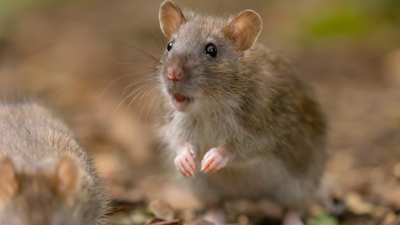
Mice are now an integral part of space research due to their similarity to the human body. According to NASA, by studying mice in space, scientists can learn how muscles, bones, and other body components react to space conditions over a short period. In one experiment, mice were sent into space aboard the International Space Station. They were exposed to various hazardous conditions for about a month. Their muscles, movements and health were then studied.
According to physiologist Mary Murtrough of Rhode Island University, it is not easy to conduct research directly on the human body due to the “extremely complex and expensive” nature of the research. This is where mice have an advantage over other species. It could give researchers quick results on how the human body will react during long-term space travel to Mars.
Gravity Threshold: Breakthrough Detection
One of the most important things I learned from this research is the concept of the “gravity threshold” for maintaining muscle.What scientists learned:
- When the gravity was 0.33 grams, the mice’s muscles remained the same size but lost strength
- When the gravity was 0.67 g, the mice’s muscles were almost completely preserved
This is a momentous discovery because Mars’ gravity is 0.38 g, which is below the gravitational threshold for maintaining full muscle tone.simply:
- Mars’ gravity may not be enough to keep astronauts fit
- More solutions will be needed
According to one scientist, this discovery will help them come up with better solutions to maintain the health of astronauts.
Exercise and training: lessons from mice
Aside from gravity, scientists are also studying other exercise-based therapies, especially those derived from studies in mice. According to research conducted by Johns Hopkins University, jumping exercises can improve cartilage quality in mice by at least 26% by increasing cartilage thickness. The importance of the research says, according to lead researcher Marco Chiaberg, that the positive effects observed from the research on mice “were unexpected, and it is interesting to consider the possibility of applying it to astronauts.” This means that future astronaut training could include:
- High-impact exercises or resistance training
- Specialized exercises before the trip
- Exercise systems designed for space travel
Astronauts still exercise for hours a day while in space, yet they still experience muscle loss.
Why is this important for Mars missions?
The journey could last for years, and the astronauts would be in a state of low gravity. This can lead to serious muscle weakness.Three main aspects can be drawn from the mouse study:
- Mars’ gravity is not enough to support muscle strength
- Artificial gravity or exercise equipment may be necessary
- Animal studies are vital for safe exploration
“Mice allow scientists to study muscle loss throughout the entire body, which is not possible to study here on Earth,” say NASA researchers.
One small step for mice, one giant leap for space health
What may seem like a basic experiment involving mice is actually an important step toward making human life possible on Mars. These discoveries are helping scientists develop smarter fitness, smarter spacecraft, and smarter missions.Ultimately, the key to space exploration may lie not in our rockets and technology, but in pioneering research on mice floating high above our heads.