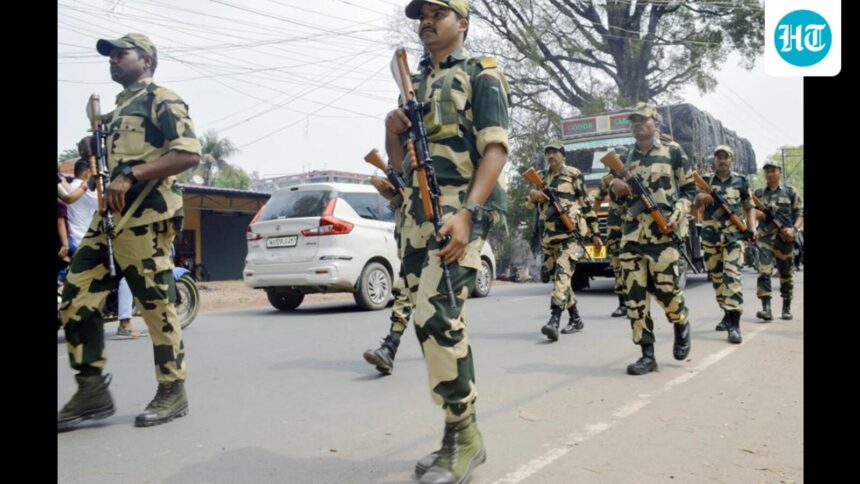
The debate over the Central Armed Police Forces (General Administration) Bill, 2026, and the parallel demands to restructure leadership patterns within the Central Armed Police Forces must be examined through a broader institutional lens. At stake is not just the issue of conditions of service, but also the long-term design and resilience of India’s internal security architecture.

While concerns about career advancement within CAPFs are legitimate and long overdue for redress, public policy in homeland security cannot focus narrowly on distributional outcomes. Structural changes must be assessed in terms of their systemic consequences, especially their impact on coordination, information flow, and crisis response.
The need for coordination in the field of internal security
Upon independence, India faced a fundamental challenge: how to ensure coherence in internal security across a broad and diverse federal system of government. The danger was not just inefficiency, but fragmentation – institutions developing in isolation, weakening their ability to act in a coordinated manner during crises.
The response is to integrate coordination into the architecture itself. Leadership pathways are designed to cross organizational and regional boundaries, ensuring that those responsible for homeland security develop a system-wide perspective rather than a silo one. This approach recognized a critical principle: that coordination in internal security cannot be improvised under pressure; It must be institutionalized in advance.
Legal coordination: the central role of the state police command
A critical, but often underappreciated, dimension of homeland security coordination is legal and procedural integration. All internal security operations, whether relating to the CAPF, intelligence agencies, or specialist units, ultimately intersect with the criminal justice system. This includes registration of FIRs, collection and admissibility of evidence, arrest and detention procedures, coordination with the prosecution and courts, etc. These functions are underpinned by the state police authority under laws such as the BNS, BNSS and BSA. At the operational level, the State Police serves as the legal backbone for all internal security measures, ensuring that operations are translated into sustainable legal outcomes. This coordination framework is institutionally led by officers of the Indian Police Service, who hold key leadership positions in: district police, state intelligence, special branches and inter-agency coordination platforms. This creates a unified practical legal bridge, without which internal security measures may remain tactically successful but legally ineffective.
Homeland security as a networked system
Homeland security today operates as a complex information network. Intelligence must move seamlessly from collection to analysis to operational deployment, often within compressed time frames. The effectiveness of this system depends not only on formal protocols, but also on informal networks of trust and familiarity built over years of shared experience.
Officers with cross-domain exposure are often better positioned to translate intelligence into actionable findings, precisely because they understand how different parts of the system interact. Weakening these links risks increased delays, coordination costs, fragmented situational awareness, and decreased operational cohesion. These costs rarely arise in routine circumstances, but become critical during moments of internal security tension.
Learning across institutional boundaries
India’s internal security framework has evolved through continuous learning across institutions. Operational innovations developed in one context are often adapted elsewhere, enhancing the overall ability of the system to respond to diverse challenges.
This process relies on inter-organizational permeability on leadership that carries experience, doctrine, and operational visions across organizational boundaries. Internal security, in this sense, is not the product of isolated excellence, but rather the product of cumulative learning across the system.
Risks of organizational isolation
Proposals to create fully isolated command structures within individual forces must be carefully evaluated. While they may address specific organizational concerns, they risk encouraging isolation in the long term.
In the context of homeland security, isolation can lead to reduced information sharing, limited interoperability, and a diminished capacity for coordinated action. Security threats, whether insurgency, terrorism, or emerging hybrid challenges, rarely conform to organizational boundaries. Therefore, effective responses depend on integration, not isolation. The issue is not about the ability of any single force, but rather about the comprehensive consequences of weakening the ties between institutions.
Reform without disrupting the internal security structure
The grievances of CAPF officers, especially regarding stagnant promotions, parity, and conditions of service, are real and deserve a meaningful solution. The CAPF (Public Administration) Bill 2026 addresses these concerns through expanded leadership opportunities, clearer cadre management frameworks, and increased institutional recognition.
Most importantly, it does so without dismantling the coordination mechanisms that underpin internal security. In this regard, the draft law represents a proportionate and measured response targeting internal inequalities while maintaining systemic coherence.
It is indeed a historic step in internal security reform, as it strengthens the human resource foundations of the Central Military Police Forces without compromising the integrative structure necessary for coordinated action.
Integration as a pillar of internal security
India’s internal security system depends on maintaining a balance between organizational independence and comprehensive integration. Mechanisms that enable cross-institutional exposure – including limited delegation of IPS services – have historically contributed to this balance by facilitating the flow of operational experience, perspective and understanding.
These arrangements are not only administrative; They are structural tools that maintain coordination. They help maintain a common operational language and reinforce the idea that homeland security is a team enterprise.
Weakening these links threatens to change the system in ways that may not be immediately visible, but may be of great importance during periods of stress.
A balanced path forward
We should not frame the current discussion as a binary choice between professional advancement and institutional stability. Both goals are valid and can be achieved simultaneously. A balanced reform approach would address career progression and conditions of service within CAPFs, enhance coordination across the internal security system, and maintain institutional linkages that enable integrated responses. Such an approach recognizes that effective internal security depends not only on the strength of individual organizations, but on the cohesion of the system.
Structural decisions in homeland security carry long-term consequences. The real test of reform is not just addressing immediate concerns, but maintaining the system’s ability to function coherently under pressure. The CAPF Public Administration Bill 2026 provides an opportunity for fairness and effectiveness. By improving professional frameworks while maintaining institutional integration, it strengthens the foundations of India’s internal security architecture. Therefore, the imperative is clear: reform must work to strengthen the system, not fragment it.
Manmohan Praharaj is a retired IPS officer who served as Director General of Police, Odisha.