New Delhi

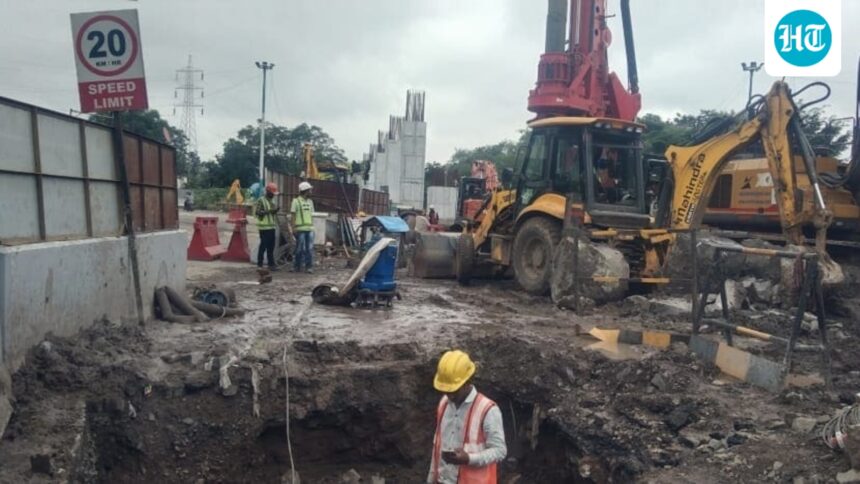
The government on Tuesday notified a new legal framework by operationalizing the Essential Commodities Act (ECA) that will require landowners to grant ‘right of way’ for expeditious and time-bound laying of gas pipelines in the country to reduce over-dependence on any single fuel, especially imported liquefied petroleum gas (LPG).
Explaining ‘right of way’ as one of the key elements of the notification, the notification said, “The Central Government considers it necessary in the public interest to establish a unified framework to address the issues hampering the laying of such pipelines including denial of access to land, delay in approvals, delay in granting right of way or right of use in land, high fees and charges, to enable entities to carry out laying of pipelines for transportation of natural gas and petroleum products in a time-bound manner and to increase the number of natural pipelines through pipelines.” Gas users all over India.
The order includes landowners from the private and government sectors, including housing associations. This development is important as the construction of gas infrastructure across the country faces excessive delays due to the inability of gas utilities to secure land rights. Often, state governments also obstruct gas grid projects by denying gas infrastructure companies the “right of way.”
“The order issued in the Extraordinary Gazette of India comes into effect immediately and establishes a comprehensive, transparent and investor-friendly framework for efficient gas distribution, rapid expansion of infrastructure and equitable access to clean energy,” the Petroleum Ministry said in a statement issued late on Tuesday evening. The notification is titled “Natural Gas and Petroleum Products (By Laying, Construction, Operation and Expansion of Pipelines and Other Facilities) Distribution Order, 2026.”
Explaining the rationale for the order, the ministry said: “India’s growing energy demand and evolving global energy landscape necessitate a resilient, diversified and efficient energy system. This addresses long-standing challenges in infrastructure development, regulatory uncertainty, and delays in approvals, while positioning natural gas as a key transitional fuel.”
At its core, he added, the reform aims to significantly improve the ease of doing business by simplifying procedures, reducing regulatory bottlenecks, and creating a predictable and transparent operating environment for stakeholders.
Key features of this include a standardized framework for laying, constructing, operating and expanding pipeline infrastructure, standardized processes and timelines to reduce ambiguity and administrative discretion, time-bound approvals with deemed approval provisions to eliminate procedural delays, and elimination of arbitrary fees and taxes to ensure transparency and cost predictability. These policy measures will help public and private investors keen to develop gas infrastructure and market cleaner fuel.
This policy will ensure faster rollout of urban gas distribution (CGD) networks and major pipelines, and reduce over-reliance on scarce LPG. The government’s move to provide clean cooking gas to all citizens has led to a significant increase in LPG connections in the last decade. The number of domestic LPG connections jumped from about 140 million in 2014 to more than 330 million now, a jump of 136%. This includes 105.6 million poor families getting free connectivity and subsidized gas cylinders under PM Ujjwala Yojana. The current war in West Asia and the fuel crisis have highlighted LPG as a weak point as India imports more than 60% of the LPG it needs. Due to the blockade on the sea route passing through the Strait of Hormuz and Iranian bombing, Iran struck the Ras Laffan industrial city in Qatar, disrupting Indian gas imports. Qatar, which supplies 47% of India’s total LPG imports, has been completely shut down since March 18.
The Ministry justified this move because it will accelerate the deployment of pipeline networks across urban and peri-urban areas, and increase the adoption of natural gas for cooking and transportation as well as industrial purposes, which will contribute to improving air quality and reducing emissions, and reliable and affordable energy supplies will support industrial and commercial activity.
“The government remains committed to expanding the role of natural gas in India’s energy mix and fostering a policy environment that encourages investment, innovation and sustainability. This represents an important step towards building a gas-based economy, supported by efficient infrastructure, ease of doing business, and broader access to clean energy,” the ministry said.