Amid a broader push to expand gas pipeline infrastructure, the government said on Wednesday that households with access to piped natural gas (PNG) will have to switch from liquefied petroleum gas (LPG) or risk losing cooking gas supplies. This comes amid a state of panic over the energy supply chain in light of the ongoing war between Iran, the United States, and Israel.

The conflict in West Asia has raised concerns about cooking fuel shortages in India, which imports about 60% of its total LPG needs, nearly 90% of which passes through the Strait of Hormuz.
The Ministry of Petroleum and Natural Gas said LPG supplies “shall stop after three months” if a family does not choose Papua New Guinea despite its availability, news agency PTI reported citing a new order.
This step comes as part of efforts to reduce dependence on a single source of fuel while promoting the use of PNG, which is considered cleaner and more convenient.
What is PNG?
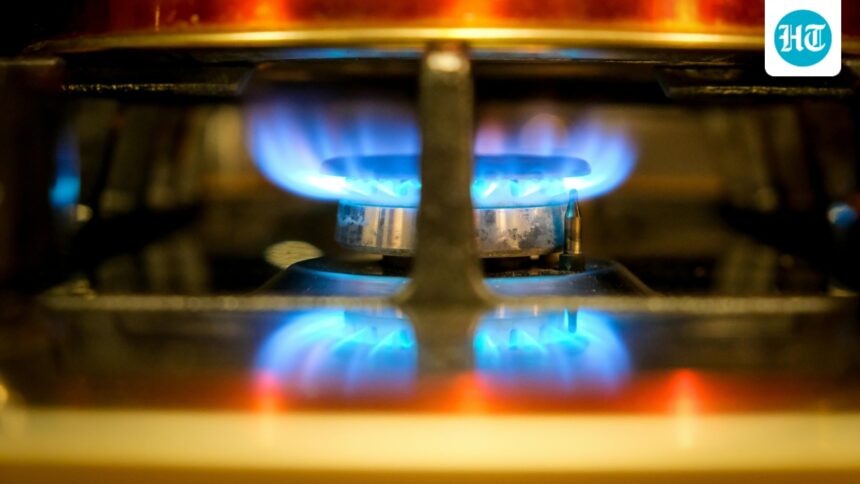
Unlike LPG cylinders, PNG is supplied directly to homes through underground pipelines, eliminating the need for storage and regular replacement of cylinders. The fuel, which is mainly methane, burns almost completely, making it an environmentally friendly option.
How can you take advantage of PNG connection?
According to the Petroleum and Natural Gas Regulatory Board (PNGRB), consumers can apply for piped natural gas (PNG) delivery by filling out a registration form. After submitting the application, the process moves to KYC verification and payment of the required fees.
Once the request is approved, the customer is assigned a Business Partner (BP) number. This is a unique identifier generated by the system and given to each consumer after paying the security deposit and other applicable fees. The BP number helps the company track and manage a customer’s account in its system.
After approval, the service provider installs the required infrastructure in the consumer’s home, including connecting pipes, gas meter, valves and regulator. Once installation is complete, the family receives a continuous supply of natural gas for cooking and other household uses.
Typically, it may take up to three months after applying for a connection to become operational.
The total cost includes a refundable, interest-free security deposit for equipment and utilities, along with installation fees for last-mile connectivity. This amount does not exceed $6000 for standard home connection. However, if the company installs a smart meter instead of the regular meter, the insurance amount can reach up to $9000.
Consumers can apply for a PNG connection through multiple channels provided by their City Gas Distribution (CGD) companies. Requests can be placed via email, customer portals, messaging or call centers of companies like Indraprastha Gas Limited, Mahanagar Gas Limited, GAIL (India) Limited and Bharat Petroleum Corporation Limited.
What consumers need to know is that once you make a PNG connection, you will no longer be allowed access to an LPG connection.
What is the difference between PNG and LPG communications?
LPG is stored in cylinders and supplied to homes through the distribution network. PNG, on the other hand, is delivered directly to homes through a network of underground pipelines. In this system, gas flows from production facilities to homes through the distribution network.
To benefit from PNG, the required infrastructure must be in place, with pipes connected directly to your kitchen.
The composition of these two gases is also different. PNG gas consists largely of methane, and is supplied via pipelines at low pressure. Even if there is a leak, methane gas spreads upward because it is thinner than air. LPG, on the other hand, consists of propane and butane, and is stored in liquid form under pressure in cylinders.
LPG consists mainly of propane and butane, which are stored in liquid form under pressure in cylinders.