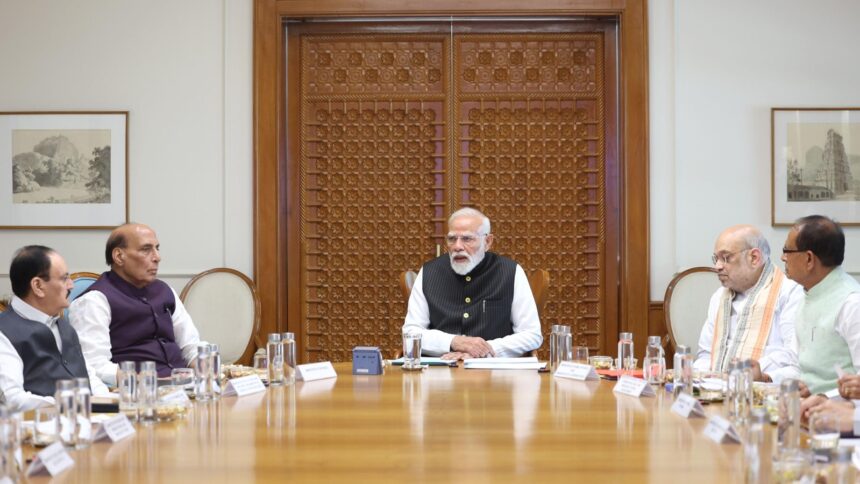
Prime Minister Narendra Modi held a high-level review on Sunday at a time when global oil markets remain volatile, with Brent crude trading at around $109 a barrel after touching an intraday high of $119 amid the West Asia conflict.

The meeting came even though an LPG tanker from the United States was anchored along India’s western coast, easing some supplies amid growing concerns about energy security. path Live updates of the war between the US, Israel and Iran
However, tensions in West Asia show no signs of abating. US President Donald Trump has warned that Washington could target Iran’s energy infrastructure if Tehran does not lift its blockade of the Strait of Hormuz – an important global transit route for oil – within 48 hours.
The Iranians, for their part, are also hostile and have attacked a nuclear facility in central Israel in retaliation for Tel Aviv’s attack on Iran’s Natanz nuclear facility. On top of all this, the Houthi rebels have also threatened to join the war with Iran while threatening shipping in the Red Sea and Suez Canal.
While chairing the meeting, the Prime Minister focused on maintaining the smooth functioning of basic sectors. Hizb ut Tahrir learned that the discussions focused on the supply of oil, crude oil, gas, energy and fertilisers, with an emphasis on ensuring that there is no unrest on the ground.
Modi also reviewed logistics and distribution networks in detail, stressing the need to maintain steady supplies across the country and prevent any bottlenecks.
Since the start of the war, retail prices of petrol and diesel for ordinary consumers have remained largely unchanged, but there has been a notable rise in other fuel classes, marking the first significant revision since March 2024.
Industrial diesel, in particular, saw a sharp rise of about 25%, reflecting pressure from global price movements amid the ongoing conflict.
Officials indicated that the government is monitoring the situation closely, with a clear focus on protecting domestic supply. While addressing a press conference earlier this week, Sujata Sharma, Joint Secretary, Ministry of Petroleum, said that New Delhi may reconsider fuel export plans if necessary to ensure adequate availability in the domestic market.
She added: “Domestic consumption is the priority, and the government will review (the export plan).” It is worth noting that India is one of the largest refining centers in the world.