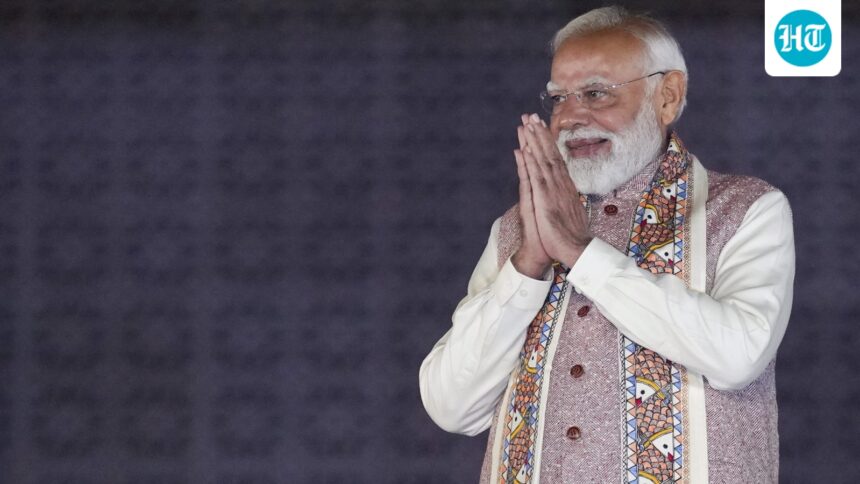
Prime Minister Narendra Modi on Sunday became India’s longest-serving head of government, overtaking former Sikkim chief minister Pawan Kumar Chamling in the total number of days in office, a feat that won praise from senior members of his cabinet and senior leaders from the ruling Bharatiya Janata Party (BJP).

With 8,931 days as head of government – during his tenure as Gujarat chief minister and chief minister – Modi surpassed Chamling’s record of 8,930 days, marking a significant moment in India’s political history.
Federal Home Minister Amit Shah described the development as a “milestone rooted in service, hard work and unwavering commitment”. In a post on the
Read also | With Prime Minister Narendra Modi becoming India’s longest serving head of government, here’s a look at the top 5 leaders
Defense Minister Rajnath Singh also congratulated the Prime Minister, saying, “Pure devotion to the nation and its people is what defines Prime Minister Modi ji.” “With 8,931 days in public office as head of government, this moment reflects his profound commitment to national governance first, integrity in work, and tireless service to every citizen,” he said on X Program.
Commerce and Industry Minister Piyush Goyal described the achievement as a “matter of pride”, noting that Modi’s journey in public life “reflects an unwavering commitment to inclusive development”. In his post
Bharatiya Janata Party president Nitin Nabin hailed the milestone, saying in a Hindi post on
Read also | Prime Minister Narendra Modi chairs a Cabinet meeting on food, fuel and fertilizer security amid the West Asia crisis
This achievement underscores Modi’s long and sustained tenure in the Executive Office, which now extends to nearly 25 years. Before moving to the national stage, he served as Chief Minister of Gujarat for more than a decade, becoming one of the state’s longest-serving leaders. He is also the Prime Minister with the longest previous experience as Prime Minister and the first to be born after independence.
Modi led the BJP to three successive Lok Sabha election victories – in 2014, 2019 and 2024 – cementing his status as one of India’s most enduring political leaders.
Reflecting on his journey last year, as he entered his 25th year as head of government, Modi recalled being sworn in as chief minister of Gujarat in 2001 under “very difficult circumstances,” including a devastating earthquake, droughts and political instability.
“It has been my constant endeavor to improve people’s lives and contribute to national development,” Modi said, adding that those early challenges strengthened his resolve to rebuild Gujarat. He described the transformation the state witnessed during his tenure as the emergence of a “force for good governance,” citing progress in agriculture, industry and infrastructure.
He also pointed to the political context before the 2014 general elections, when he was selected as the BJP’s prime ministerial candidate in 2013, a period he described as one marked by a “crisis of confidence and governance”. Modi credited voters with giving his party a decisive mandate.