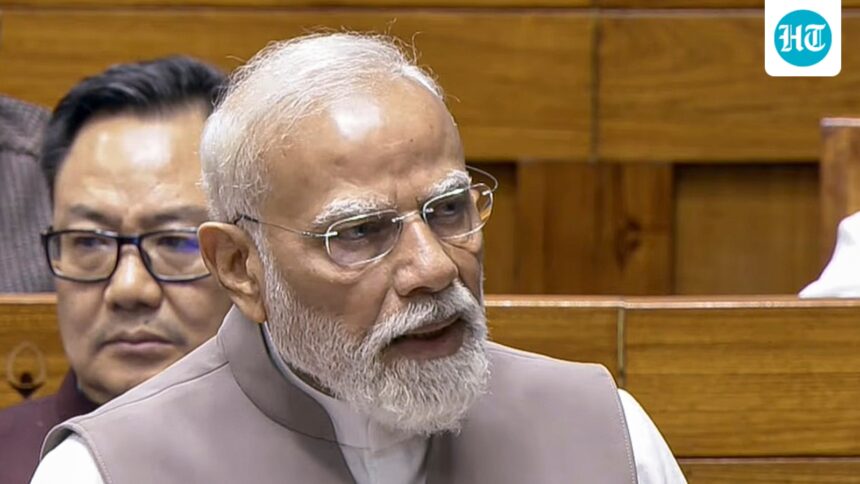
Speaking for the first time in Parliament since the start of the US-Iran war in West Asia, Prime Minister Narendra Modi said India is dealing with multiple economic, security and humanitarian challenges arising from the war, while ensuring that its citizens and key supplies remain protected.

Raising concerns about unrest in the Strait of Hormuz, Modi said attacks on commercial ships were “unacceptable” and that the government was closely monitoring routes to ensure supplies of crude oil, gas and fertilisers were not interrupted.
“The entire world has been affected and we are making efforts so that India feels the impact as little as possible,” Prime Minister Modi told the Lok Sabha. “The fundamentals of the Indian economy are strong, and that has helped,” he added.
Follow live updates on Prime Minister Modi’s Lok Sabha speech
Here are the top five points from Prime Minister Modi’s speech in Lok Sabha on the West Asia war:
1. Evacuation of Indians and safety measures:
Modi said the government has prioritized the safety of Indians amid the conflict in West Asia, where about 3.75 lakh citizens have returned to their homes since the war began, including 1,000 evacuees from Iran, including 700 medical students. He admitted that some Indians died and others were injured, adding that treatment and financial assistance were being provided to the affected families.
Indian missions across the Gulf countries are assisting workers and tourists, supported by control rooms and emergency helplines that operate 24/7. Modi also said that he held two rounds of talks with West Asian leaders, who emphasized the safety of Indian citizens.
2. The Strait of Hormuz and trade concerns:
Pointing to the risks facing global trade, Modi said attacks on commercial ships were “unacceptable” and expressed concern about unrest in the Strait of Hormuz. He said the government is closely monitoring shipping routes in the Gulf to ensure that vital supplies such as crude oil, gas and fertilizers continue to reach India without major disruption.
Read also: India diversifies its imports, PM Modi praises energy security in speech to Parliament
3. Impact on farmers and food security:
Addressing concerns over agriculture, Modi assured farmers that the government would continue to support them despite the global uncertainty. He said that India currently has sufficient stocks of food grains and pointed out how farmers are being protected even during supply disruptions due to the Covid-19 pandemic. The government also closely monitors fertilizer supplies, given their reliance on roads damaged by the conflict.
In light of the conflict in West Asia, Prime Minister Modi said, “I want to tell the farmers that the government will continue to make every effort to help them.”
“At the present time, we have sufficient reserves of coal,” he said, promising that energy supplies would not be interrupted.
4. Energy security and fuel supply:
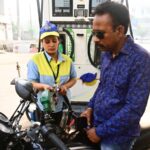
On energy, Modi said the government was working to ensure uninterrupted availability of petrol, diesel and LPG. Domestic consumption of LPG has been prioritized in light of the situation, while steps are being taken to prevent sharp increases in fuel prices. He stressed that India has diversified its energy imports over the years and now sources crude oil, LPG and gas from 41 countries. He also stressed that coal stocks are sufficient and that power supplies will not be interrupted.
“Due to supply uncertainty, the government has given priority to domestic LPG consumers. At the same time, domestic production of LPG is also being increased. Continuous efforts have also been made to ensure that petrol and diesel supplies across the country remain smooth,” he said.
5. Economic and strategic prospects:
Modi said that the war represents unprecedented economic, security and humanitarian challenges for India, especially in light of its trade relations with all parties involved and the presence of nearly one million Indians in the Gulf region.
He noted that although the global impact of the conflict is unavoidable, the government is making efforts to ensure that India is the least affected. Stressing that the country’s economic fundamentals remain strong, he called for unity in Parliament so that India can send a clear and collective message to the world.