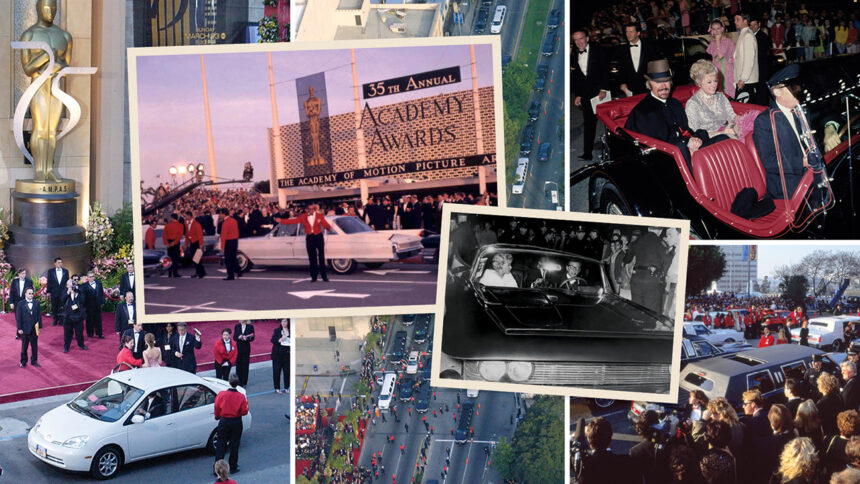
When you’re transporting hundreds of celebrities to the Oscars, the last thing you want is rain.
If the water falls, the convoy of chauffeured vehicles slows down, heavy congestion ensues, and the red carpet arrival timetable collapses until two. Plus it’s not safe. “The traffic itself is a security risk,” says David Selinger, CEO of EmpireCLS — among the event’s largest suppliers of luxury transportation — since the crowded parade of stars could become a target for photographers, rabid fans, or worse. “Safety is our number one priority for our attendees and staff.”
Seelinger’s cast on Oscar night is amazing. “We will have about 300 cars participating in the event this year,” he says. The vehicles are drawn primarily from Empire’s local fleets, although attachments arrive from as far away as San Francisco and Las Vegas.

If this were the 1900s, most of these trips would be stretch limousines. If it had been the 2000s, a slew of stars would have appeared in Priuses, as did Leonardo DiCaprio, Cameron Diaz and Harrison Ford. These days, stars prefer SUVs. “The Cadillac Escalade is the No. 1 order,” Selinger says. “It’s comfortable, and when the customer gets out of it, it looks very stylish.” Empire operates a large fleet of battery-powered Escalades, along with gas versions, and offers six-figure Lucid Air electric sedans for those who prefer a conventional vehicle. “Some studios will rent electric cars just for events,” he adds, and for major candidates, studios often cover transportation.
For attendees traveling in groups or with a stylist, Seelinger has other options. “We use luxury Mercedes Sprinter vans,” he says. “It’s very spacious, with high ceilings and a low entrance to the red carpet, so for the ladies — or anyone wearing a dress, I should say — it’s easier to get in and out.”
Cars are full of bottled water, and drivers often offer snacks. However, passengers sometimes submit “unique” supplementary requests. Although non-disclosure agreements prevent Selinger from detailing these matters (or naming his agents), he attests that the Empire does its best to accommodate them. “It doesn’t matter what it is, we usually do it, as long as it’s not against the law,” he says with a laugh. Since it is a long night, the drivers are fed a delicious dinner by the company in the staging area while the passengers are at the event.

The procession to the Dolby Theater is carefully choreographed like a K-Pop video. Coordination between the academy, municipal organizations and first responders begins months in advance. “For all planned events, the Los Angeles Department of Transportation develops a comprehensive traffic management plan that specifies the timing and locations of required road closures, parking restrictions and [traffic] “Signal timing changes,” says LADOT spokesman Colin Sweeney.
For the Oscars, road closures begin two weeks in advance and reach their full extent the night before. Sweeney adds that the administration is also coordinating with the Metro’s public transit system to reroute buses around the convoy and implement subway station closures.
The actual route the driver takes to get to the vehicle is top secret and includes emergency situations. “There’s always a primary, secondary, and tertiary route, so if something happens, we can switch midway,” Selinger says.
All of Empire’s vehicles have tracking devices, sharing location and timing information with dozens of transports and academy staff via two command centers — one at the company’s headquarters in El Segundo and the other at Dolby. Both sites are equipped with triple redundant communications and logistics software and satellite Wi-Fi. “No one stops without notifying the academy staff who are on site,” Selinger says. Sweeney adds that LADOT representatives “manage their own unified command structure to manage traffic flow, control congestion and respond quickly to any disturbances.”

When arriving on stage, movements are tightly controlled. For example, in a typical airport or corporate delivery station, drivers get out and open the door for the customer. When they arrive at Dolby, they are asked to stay in the car. “We can’t have the driver walk the red carpet,” Selinger says.

Staying behind the wheel also ensures the safety of passengers. “That way, the driver is ready in case he has to get the customer out of there quickly,” Selinger says. When asked if the Empire was using armored vehicles, Selinger demurred, saying, “We have to keep this stuff quiet.” But he admits that the drivers – who are background checked and undergo a three-week driver academy – are trained on “what to do in an emergency.”

The vehicles typically run for 12 hours on Oscar night, so a similarly coordinated ballet is performed for departure: “No one waits. People are swooped in very quickly and taken to one of the countless events throughout the night,” Selinger says.
Seelinger demurs again when asked how much a studio or individual would pay for this service and won’t even accept our guesses, which range from $6,000 to $12,000.
“I can’t say exactly how much it will cost because of our non-disclosure agreements,” he says. “It depends on who you’re targeting. But it’s a fair price.” “Let’s just say, if you shop at Lewes, you know what it costs.”

This story appeared in the March 11 issue of The Hollywood Reporter. Click here to subscribe.