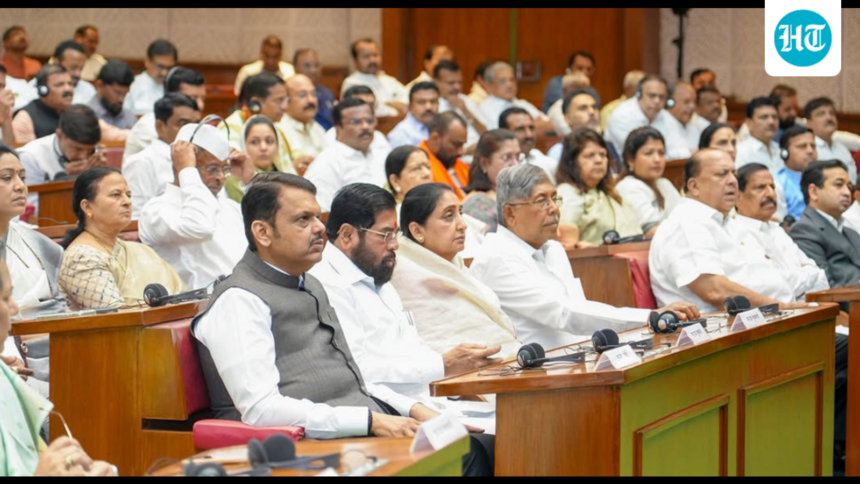
The bill introduced in the Maharashtra Assembly on Friday declares a marriage deemed solemn due to “illegal conversion” null and void, and says children born from such marriages will belong to the mother’s religion before marriage, and their custody will remain with them.

Minister of State for Home Pankaj Bhoyar introduced the Maharashtra Freedom of Religion Bill and it is expected to be discussed on Monday.
The draft law says that a child born outside this marriage will have inheritance rights to the property of both parents in accordance with the prevailing laws applicable to them. “The child is entitled to maintenance as per the provisions of Section 144 of the Bharatiya Nagarik Suraksha Sanhita Act, 2023. The custody of the child shall be with the mother unless the court decides otherwise.”
The bill is widely seen as an attempt to eliminate religious conversions through marriage, especially between Hindu women and non-Hindu men, which requires women to convert to the other religion. Right-wing groups call such unions “love jihad” to describe an alleged Islamic conspiracy to attract Hindu women, although the courts and the federal government do not officially recognize it.
The draft law seeks to make “unlawful religious conversion” a recognized non-bailable offence, punishable by imprisonment of up to seven years and a fine of up to $5 lakh. It stipulates a 60-day notice for any person intending to convert to the appointed authority, or district collector, whose permission must be obtained before converting religions. The draft law stipulates that the transfer must be registered within 21 days, otherwise it will be considered invalid.
Repeat offenders may face imprisonment of up to 10 years and a fine of up to $7 lakh. Institutions and organizations found to be involved in “illegal transfers” may face deregistration. Those responsible for these institutions may face imprisonment for up to seven years and a fine $5 lakh.
In cases of conversion of Scheduled Castes or Scheduled Tribes, the term of imprisonment may extend to seven years, and a fine of up to $5 lakh.
The bill seeks to make it punishable by law for “aiding, abetting, advising, persuading or procuring” another person to such a conversion. Individuals responsible for executing, endorsing or certifying documents relating to such transfers could also be treated as aiding and abetting the offense and would be liable to a similar penalty.
The proposed law states that any religious conversion undertaken through “enticement, coercion, deception, force, misrepresentation, or other fraudulent means” would be considered illegal. The burden of proof will be on the accused.
The objectives of the draft law stipulate that the right to freedom of religion under the Constitution is not absolute, but is subject to public order, morality and fundamental rights of citizens. “Instances of forced or involuntary religious conversions or those resulting from affecting the free consent of citizens have increased, causing disruption to public order and social harmony… Since the current laws are not sufficient to address illegal religious conversions, this law is considered appropriate.”