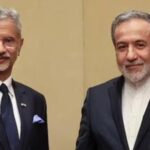
NEW DELHI: External Affairs Minister S Jaishankar spoke with his Iranian counterpart Syed Abbas Araqchi in their fourth such conversation since the start of the West Asia crisis, as New Delhi intensifies efforts to secure safe passage for 28 commercial ships currently stationed on both sides of the Strait of Hormuz.

The two foreign ministers held a telephone conversation on Thursday evening.
Jaishankar and Araghchi spoke on February 28, shortly after the United States and Israel launched the attack on Iran that led to the killing of Ayatollah Ali Khamenei. They also spoke on March 5 and 10.
“I had another conversation with Iranian Foreign Minister @araghchi yesterday evening. We discussed bilateral issues as well as issues related to BRICS,” the Foreign Affairs Minister said on social media.
The latest phone conversation came as India intensified its efforts to secure safe passage for Indian-flagged commercial ships through the strategic shipping route in the Strait of Hormuz that Tehran had partially closed after escalating its conflict with the US and Israel.
An Iranian statement said that Araqchi briefed his Indian counterpart on the latest developments “resulting from the attacks and crimes” committed by the United States and Israel against Iran and their consequences on the stability and security of the region and the world.
She added that the Iranian Foreign Minister assured Jaishankar of Tehran’s firm will to exercise “the legitimate right to self-defense.”
The statement said, “Araqchi stressed the need for international and regional forums and organizations to condemn the military aggression against Iran.”
He added, “In reference to the importance of the role and status of BRICS as a forum for developing multilateral cooperation, he considered it necessary for this institution to play a constructive role at the current stage to support stability and security in the region and the world.”
She said that Araqchi stressed the importance of finding a way to enhance stability and a sustainable security environment in the region, describing it as a “collective need.”
This article was generated from an automated news feed without any modifications to the text.