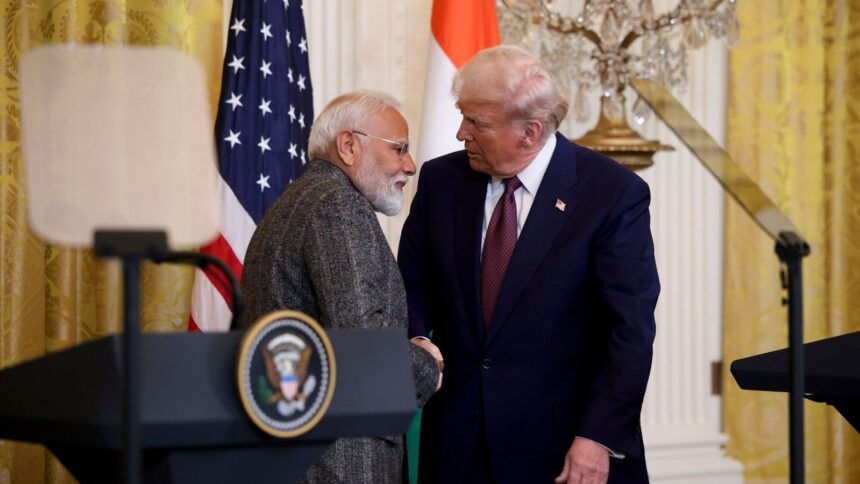
On Tuesday, the White House disputed the reasons behind “allowing” India to buy Russian oil. Speaking to reporters, Press Secretary Carolyn Levitt said the decision, approved by US President Donald Trump and the US Treasury Department, comes at a time when “our allies in India have been good actors.”

“We came to this decision because our allies in India were good actors and had previously stopped purchasing Russian oil under sanctions. So, as we work to smooth out this temporary gap in the world’s oil supply caused by the Iranians, we have temporarily allowed India to accept Russian oil,” Levitt said.
Follow live updates on the US-Iran war
She added that the United States agreed to this decision because Russian oil coming to India was “already at sea” and would not provide “significant financial benefit to the Russian government.”
India “allows” the purchase of Russian oil
Earlier this month, US Treasury Secretary Scott Besent also said that India would be allowed to buy Russian oil amid the oil supply crisis caused by the ongoing conflict in West Asia. The waiver was also signed by President Trump
“The Indians have been very good actors,” Besant told Fox News. “They stopped buying Russian oil when we asked them to, and now we are allowing them to accept Russian oil to provide supplies.”
Read also | ‘To ease the pressure a little’: Trump on US concession to India to buy Russian oil amid Iran war
These comments from Besant come after the US and India announced the framework of their trade agreement, which saw New Delhi’s tariffs reduced from 50 per cent to 18 per cent. India was initially slapped with 25 per cent tariffs under Trump’s ‘Liberation Day’ exercise.
This tax was later raised to 50% by Trump as punishment for India’s purchase of Russian oil, as he accused New Delhi of “fueling the war in Ukraine.”
However, with the US-India trade deal, the White House stated that the tariff on India has been reduced based on New Delhi’s commitment to reduce and stop its purchase of Russian oil.
India did not explicitly announce that it would stop purchasing Russian oil, but stated that in a “volatile energy market environment, New Delhi will continue to prioritize its 1.4 billion people.”
The US-Iranian war sparks the oil crisis
The ongoing conflict between the United States, Israel and Iran in West Asia has sparked a crisis in the oil and energy industry after supply lines were hit. Due to the war-like conflict, Iran announced that it would close the Strait of Hormuz, a vital route through which 20 percent of the world’s oil and gas supplies pass.
Most oil exports from OPEC producers such as Saudi Arabia, Iraq, Kuwait, the United Arab Emirates and Iran move through this strait, primarily to Asia. Qatar also sends almost all of its LNG exports through these waters.
Given this impact on supply lines, Asian countries, including India, are reviewing ways to save fuel.
In India, the central government formed a grievance redressal committee and took steps to increase LPG supplies amid reports of a shortage of commercial cylinders in several parts of India.
According to a statement issued by the Ministry of Petroleum and Natural Gas, India will prioritize the use of domestic LPG and has asked refineries to increase production. Non-essential and commercial use of LPG is now under review.