On February 22, a room on the third floor of the Manipur Bhavan building in New Delhi witnessed a meeting that would have been routine in any other state. But for Manipur, it was anything but routine.

It has been two weeks after the Prime Minister and the two Deputy Chief Ministers took charge of Manipur. But the three met for the first time in person under one roof, after assuming power in the national capital that day – an event made impossible in the state capital Imphal due to the sharp ethnic divisions that continue to roil Manipur.
The meeting – where Chief Minister Yumnam Khimchand Singh, of the Meitei tribe, and his two deputies, Lucy Dekho, of the Naga, and Nimsha Kipgin, of the Kuki-Zu tribe, discussed the way forward in the conflict-torn state – is just one sign of the daunting challenge facing the new government in restoring normalcy to a province effectively divided into ethnic enclaves.
Kipgen, who was unable to travel to Imphal to take oath along with her Cabinet colleagues on February 5 and took oath virtually from Manipur Bhawan in Delhi, has not yet been able to set up office in the state capital, senior government officials in Imphal said.
Officials said Kipjin – whose appointment also sparked violent protests among Kuki Zo communities – attends official meetings from the deputy commissioner’s office and her home in the Kangbukpi hill district.
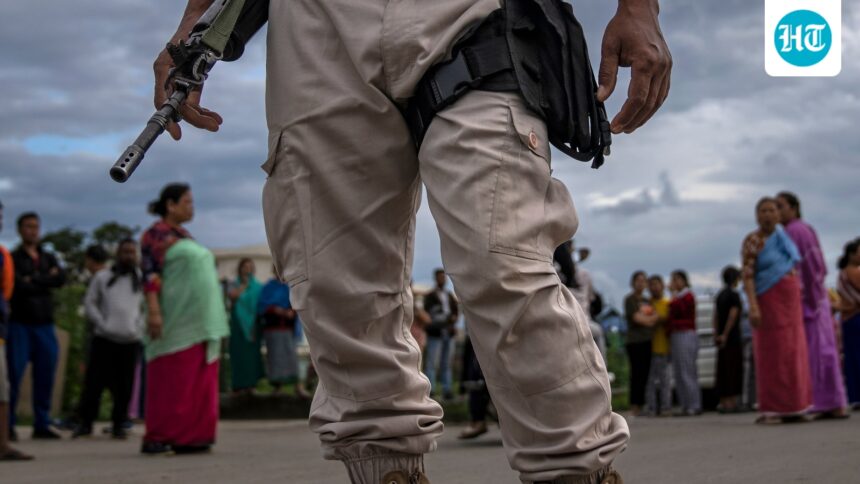
The Meitei tribe lives in the valley and controls Imphal, and the Kuki-Zu communities inhabit the hill areas, where security personnel and armed local militias guard so-called buffer zones.
“Deputy CM Kipgen has been attending meetings from the deputy commissioner’s office in Kangpokpi as she is yet to travel to Imphal. The district administration is arranging video conferencing facility. She has been meeting with the CM and her Cabinet colleagues through the VC almost every day,” an officer privy to the matter said.
Currently, she has been allocated a room in the Sadar Hills Autonomous Council building in Kangpokpi Town area as her new office, the official added.
She’s not the only one.
Officials in Churachandpur said CM Singh is yet to visit the hills dominated by the Kuki-Zos tribe. On February 19, Singh met Kuki-Zo victims of ethnic clashes from the hill district of Churachandpur, but only virtually.
The above officials described this as a good start as the Kuki-Zu communities had refused to recognize former Prime Minister Biren Singh after clashes broke out in May 2023.
“At least this is a positive start,” said a second official. “The Kuki-zoo victims were willing to talk to Kemchand, even if it was through VC, and acknowledge him as the prime minister of the country. This is something, which was not happening before. They may not be able to travel to Churachandpur or Kangpokpi immediately, but at least they are in touch virtually and welcome someone who is trying to restore normalcy.”
The official added that when Kipgen returned to Kangpokpi town from Delhi, she did not take a flight to Imphal and instead went to Dimapur in neighboring Nagaland and then arrived by road.
Dimapur is approximately 6-7 hours away from Kangpokpi while Imphal is just an hour’s drive away, but the route between Kangpokpi and Dimapur does not include any mitti areas.
The second officer described Singh’s recent visit to Jiribam, near the Manipur-Assam border, as a small victory. The Meitei and Kuki people live in the same area there, but in different areas.
“The new chief minister can visit Jiribam and interact with the residents of the Hamar community. This was not possible before. Armed groups attacked Biren Singh’s convoy at this location while it was heading to Jiribam Expressway for security preparation. He could never visit Jiribam after that,” the second officer said.
Only MP CM Dekho was able to visit both Imphal and Churachandpur – on February 14, 20 and March 2. This is because the community he hails from, the Naga, has long been considered neutral in the ethnic clashes between the Metis and Kukis.
“I have been to Churachandpur and Kangpokpi so far. The people have been welcoming, which is a positive sign. The Prime Minister has actually met the internally displaced people in Kuki-Zo as well. The feedback has been good. The government is working to restore normalcy. Everyone is working to bring peace back to the state,” Dekho said.
Singh and Kipgen were not available for comment.
A third official, who requested to remain anonymous, said the next two weeks are very important for the state as 260 people have died and another 60,000 have been displaced over the past two years.
“The Manipur Assembly session begins on Monday. Deputy Chief Minister Kipgen may come to Imphal to attend the session in person. It will continue for at least a week. We will have to make security arrangements. After the assembly session, the Prime Minister may visit the hill areas starting from Kangpokpi and then Churachandpur. If that happens and if the locals allow it, it will be a step forward towards normalcy,” the third officer added.