Over 60% voter turnout in Nepal in ‘historic’ polls supported by Generation Z
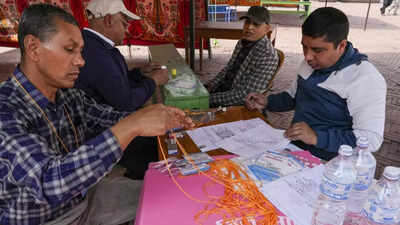
KATHMANDU: As Nepal went to the polls on Thursday, the country’s Generation Z voters – many of whom took part in the September protests that reshaped the country’s politics – turned out in droves for snap parliamentary elections, with students and young workers lining up outside polling stations set up at schools, temples and community gathering places.
Many traveled for days across the Himalayan country to reach their constituencies.Roads in Kathmandu were largely empty after the Election Commission of Nepal imposed a routine vehicle ban on election day, leaving voters walking the last route to polling stations.Acting Chief Election Commissioner Ram Prasad Bhandari said the initial turnout was just above 60% as of 5pm, adding that the number was expected to rise once data from remote and mountainous areas arrived.
The participation rate in the 2022 elections was 61.4%. “Generation Z voters seemed happy with how the poll was going and their enthusiasm was amazing. Their passion to vote was high,” he said. The Nepalese Parliament has 275 seats, of which 110 seats are allocated through proportional representation, which means that the final counting of votes nationwide may take several days as ballot papers arrive from distant regions.Interim Prime Minister of Nepal: Prioritizing holding elections peacefully despite uncertaintyNearly 80% of Nepal’s terrain is mountainous, which further complicates ballot transportation and electoral logistics in remote areas.
A turnout of over 60% would be huge, considering that more than 20% of registered voters work abroad, a political analyst told TOI. The participation rate in the previous elections in 2022 was 61.4%.Interim Prime Minister Sushila Karki, Nepal’s first woman to hold the post and was chosen after youth activists organized an online vote following KP Sharma Oli’s resignation, cast her vote early in Kathmandu and told reporters: “My duty is complete.”
She said her government prioritized holding the elections peacefully despite the political uncertainty. He added: “We were careful from the beginning to avoid any bloodshed during the elections… The elections were conducted in a sparing manner despite doubts about the possibility of organizing them.
The next government will inherit the expectations of young voters. It carries the hopes of young people – hope for change and a road map for development.The early elections came after months of political unrest sparked by last year’s Generation Z protests, which began after a brief social media ban and expanded into demonstrations demanding accountability, governance reform and job creation. The two-day uprising on September 8 and 9, in which more than 70 demonstrators were killed, led to the eventual collapse of the government and paved the way for early elections.For activists who helped organize the protests, polling day marked the next phase of that movement, turning street pressure into votes.Amrita Bhan, 23, a Gen Z anti-corruption organizer who participated in the September protests, described the day as very emotional. “This big day feels like a whirlwind of emotions,” she said. “For six months, people have been wondering whether it is possible to hold elections after all the bloodshed.” She said many organizers felt overwhelmed by the turnout of young voters across the regions. Majid Ansari, another Gen Z activist, said youth participation seems unprecedented.
“I have never seen teens and young adults so hungry to vote,” he said. He framed the election as a response to the unrest that followed the protests. “We started with a demand for accountability and reforms, not revolution. What followed was harsher than we imagined…”Ansari also called for the government that will assume power to be held accountable for the violence during the unrest.