As the killing of Iranian Supreme Leader Ayatollah Ali Khamenei in joint US-Israeli strikes sent shockwaves across the region, India’s opposition parties turned their fire on Prime Minister Narendra Modi on Sunday, attacking his government’s silence over the assassination and accusing him of abandoning India’s traditional foreign policy stance.

He follows: Live updates on the conflict
The most pointed reaction came from Congress spokesman Pawan Khera, who wrote on
The country also witnessed widespread protests, especially by the Shiite community, in Lucknow and cities in Kashmir and Hyderabad.
Samajwadi Party chief and former UP chief Akhilesh Yadav said: “In these circumstances of deadly attacks and war targeting everyone, from the most prominent figures to the common citizens of any country, the government of our country must clarify its stand on this international issue…and as a neutral country, what diplomatic efforts it is making to stop the war and restore peace.”
This was preceded by a broader attack from Congress General Secretary Jairam Ramesh.
“India’s foreign policy under the self-proclaimed Vishwaguru rule is brutally exposed, despite all the bluster by the supporters of the Prime Minister, led by himself,” Ramesh wrote on X on Saturday.
He pointed to the timing of Modi’s visit to Israel on February 25 and 26, from which the Prime Minister returned just two days before Washington and Tel Aviv launched their strikes.
“The Modi government’s response to the war on Iran, which included targeted assassinations, was a betrayal of India’s values, principles, concerns and interests,” he said.
AAP’s Sanjay Singh also attacked the Prime Minister’s silence on Sunday.
“Say something about the tyranny of America and Israel, Modi ji – you are not Vishwaguru, you are Guru Ghantali,” Singh wrote, using Hindi language to express the hollow stance.
“The tyranny of the global dictator America will spread throughout the world,” he warned.
“The killing of the Supreme Leader and other senior officials by the imperialist United States and Zionist Israel in violation of Iran’s national sovereignty and international law is completely reprehensible and must be condemned in the strongest possible terms,” Secretary General of the Communist Party of Iran (Maoist) Ma Bibi said in an official statement.
He urged the Modi government to “play a leadership role in rallying all democratic voices together so that the violent attacks are stopped.”
What the Modi government said
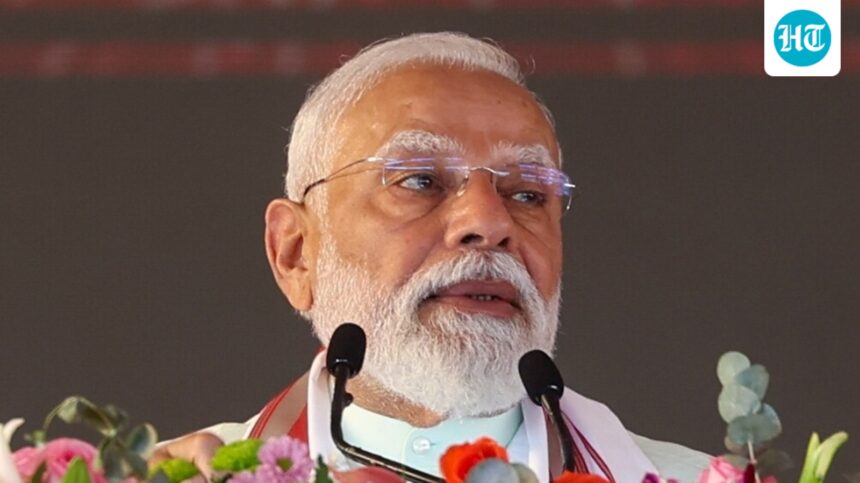
Modi himself had not issued any public statement on Khamenei’s killing or the broader conflict as of Sunday afternoon. The government’s response came from the Ministry of Foreign Affairs.
MEA spokesperson Randhir Jaiswal issued a statement on Saturday saying: “India is deeply concerned about the recent developments in Iran and the Gulf region. We urge all parties to exercise restraint, avoid escalation and prioritize the safety of civilians. Dialogue and diplomacy should be pursued to de-escalate tensions and address the underlying issues. The sovereignty and territorial integrity of all countries must be respected.”
The Ministry of Foreign Affairs added that Indian missions in the region were in contact with citizens and issued warnings urging vigilance.
External Affairs Minister S Jaishankar held separate calls with his counterparts across the Gulf – including the foreign ministers of Saudi Arabia, Kuwait, Bahrain, Qatar and the UAE – stressing India’s concern over the “escalating situation” and securing assurances for the well-being of Indian citizens in the region. He also spoke with Iranian Foreign Minister Sayyed Abbas Araghchi and his Israeli counterpart, Gideon Saar.
The Cabinet Security Committee headed by the Prime Minister is scheduled to meet in Delhi on Sunday evening as the conflict expands, with Iran launching retaliatory missile strikes on Israel and US military installations across the Gulf after Khamenei’s death was confirmed.
Protests across India
Hours after Khamenei’s death was announced, the All India Shiite Council organized a protest at Jantar Mantar in Delhi, raising slogans against the United States and Israel, while similar gatherings broke out in Jammu and Kashmir, where men, women and children gathered carrying pictures of Khamenei, black flags and banners in support of Iran.
News agencies reported that traditional mourning chants of “Noha” could be heard in the streets. Kashmir witnessed major protests in Lal Chowk, Saida Kadal, Budgam, Bandipora, Anantnag and Pulwama.
In Lucknow, a protester told ANI: “They kept deceiving us with talks and threatening war, but our leader was neither afraid nor bowed.”
Shiite cleric Maulana Yaqub Abbas, secretary-general of the All India Shiite Personal Law Board, declared three days of mourning and said the community would burn effigies of Donald Trump and Benjamin Netanyahu on Monday.
“The world believes that by killing Khamenei, Iran will end. America and Israel will receive an appropriate response from Iran,” Abbas told ANI.
Another Shiite leader, Sayed Samar Kazemi, said: “He was killed only because he raised his voice for killing in Palestine while the world was silent.”
The imam of the Shiite Jami Mosque in Delhi, Maulana Muhammad Ali Mohsin Taqi, warned of a dangerous precedent, saying: “The president of any country can be kidnapped, and the leadership of any country can be killed by bombs. It was Iran today, and tomorrow it may be Türkiye and Saudi Arabia.”
Mirwaiz Umar Farooq, Kashmir’s chief priest, called it “a moment for the nation to transcend divisions and stand united”, while the Muttahida Ulema Council called for a full strike on Monday.
Jammu and Kashmir Chief Minister Omar Abdullah said he was “deeply concerned” and urged communities to “remain calm, maintain peace and avoid any actions that may lead to tension or unrest.”
He said his government is coordinating with the Ministry of External Affairs to ensure the safety of the people of Jammu and Kashmir, including students, who are currently in Iran.
The protests also reached Karnataka, where residents of Alipur, a village with a historical connection to Khamenei, who visited years ago, declared a three-day period of mourning.