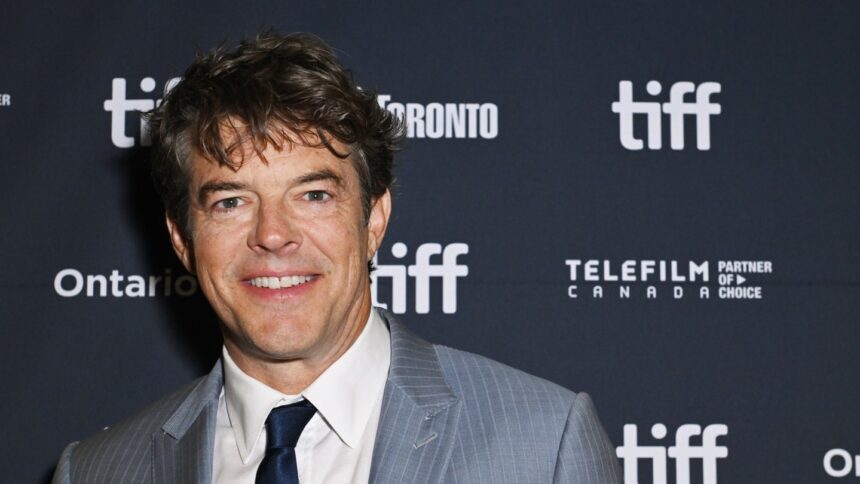
Jason Blum’s name is synonymous with horror. Search for the word prolific, and you’ll likely find it as part of that definition. Bloom has over 200 producing credits to his name, mostly in films but in television as well. The year 2025 saw the release of seven films, all in the horror genre except one, a realistic drama Lost bus.
Over the years, he has provided nightmares to audiences via huge horror franchises such as Paranormal activity, Insidious, Black phone, Cleansingand Five nights at freddy’sBut it also earned accolades, including Oscar nominations, for Damien Chazelle InjurySpike Lee BlackKkKlansmanAnd Jordan Peele Get out.
He did this mostly by producing his films independently. Now, after Blumhouse’s merger with James Wan’s Atomic Monster, Blum is a bigger movie player in Hollywood.
This Saturday, the Producers Guild of America will award him the Milestone Award, which honors “individuals or teams who have made historic contributions to the entertainment industry.” Previous winners have ranged from Walt Disney, Alfred Hitchcock, Steven Spielberg, James Cameron, Donna Langley and Ted Sarandos.
Seems like a good time to chat…
What do you think has been your biggest contribution to the industry?
I think my biggest contribution to the industry was by creating one of the last kinds of independent studios with a brand that really relied on cutting budgets by giving artists royalties, allowing for cutting-edge TV and films. I haven’t read that, by the way. That was off the top of my head.
Have other people followed you or do you think you’re the only one doing this?
People are creating different versions of it, and by the way, we weren’t the first to do that, but we were the first and only one to scale it. We’ve been able to scale this approach rather than doing it once or twice or as a side gig. For 20 years we’ve focused on producing scary movies and have expanded that business so that when anyone is looking for scary stuff, we’re there one way or another, whether it’s movies, TV shows, live events or merchandise.
I got involved in live events very early on. At what point did you realize that this was something you could monetize?
It’s disingenuous to say we didn’t do it for the money, but it was also what I was focused on from the beginning, which was to associate the Blumhouse name with things that were actually scary. So I always thought that if we did a live event and it was great and it was called Blumhouse, more people would go to the movies, you know?
You recently hired a CEO from Shudder, Sam Zimmerman. Is this in an effort to try to stay involved in the horror scene?
I wouldn’t put it that way at all. As the brand has evolved and after our merger with Atomic Monster, we’ve been producing slightly more expensive films. It’s not expensive, but compared to what we were making, it’s more expensive. And I don’t want to lose the ability to make low-budget, very low-budget films. We watch some sub-million dollar movies, and I want to have the device to continue doing that.
When you talk about scaling projects, you’re redesigning or reimagining the Exorcist-You are restarting opinionI tried to do a play to get the rights The Texas Chainsaw Massacre. Are you focusing more now on the IP name?
Part of the company is definitely focusing on more IP names. Because in the post-Covid world, the originals that work are fewer and far between, and the ones that do are much greater. In the last two and a half years, there has been only one movie made for less than $5 million…
Which one is that?
The only very low budget film that crossed over was Long legs. That was two years ago now. Obviously, the originals completely connected with audiences last year; Sinners and WeaponsThey are much bigger films. But other films that really work are IP. Black Telephone, Five Nights at Freddy’s, Final Destination. I think people now, when they go to the cinema, make a decision before they go. They don’t just show up and say, “I want to see a horror movie.” They, more often than not, choose something that means more to them than just a title.

So how do you avoid, and I’ll use Disney here for comparison, a situation where all you’re doing is reproducing live action? Yes, it can be incredibly successful, but the tap will run out sooner rather than later. You shouldn’t just rely on a guy wearing a mask for 50 years, right?
First, I love being compared to Disney because we want to be the Disney of Fear, and that makes me so happy. The very simple answer to your question is that you should keep making originals. So, this year, out of our five wide releases, we have two originals. We have mania And we have Another mother. So, 40 percent of our menu this year is original. We will always continue to make originals. But it was fifty-fifty, and now a little less.
What is behind this transformation?
COVID has done a number on certain types of plays. You know, people want bigger experiences or they want movies that are connected to the IP, or they want something that they were familiar with before. So there must be a reason to go. Now, when you give them a reason to leave, you can point out that people are showing up more than ever after coronavirus. Our biggest releases were post-coronavirus. Five nights at freddy’s It’s our biggest movie. That was ’23… after Covid.

Last question. Looking back over your entire career, do you have one film that stands out above all else?
Get out It stands out to me because it hit every example of what we did. It was very low budget, it was very unusual, it was very left of center, and I think it changed the face of horror in a more profound way than any horror film of the 21st century.street century. I think that’s what Jordan did Get out Changed the course of horror.
How is that?
I think for better or worse, he made horror cool. And if you like horror, this is great. If you don’t like horror, this is no good. I think a lot of filmmakers, who had never made a horror film before Get outTry it next.
So the AV Club became very popular.
That’s a good way to say it. He made the AV Club great.
A version of this story appeared in the February 23 issue of The Hollywood Reporter magazine. Click here to subscribe.