With the number of vehicles in Bengaluru approaching one crore, urban mobility has become a pressing concern. In response, the Bengaluru Development Authority (BDA) is moving ahead with the ambitious Bengaluru Business Corridor project.

The project, formerly known as the Peripheral Ring Road (PRR), is designed to divert traffic away from internal roads.
Will this project help reduce traffic?
This project is expected to separate long-distance vehicles from local passengers and reduce pressure on the outer extensions of the city.
Read also Bengaluru Business Corridor: 8-lane expressway features cycle lanes, metro-ready median and more
8 lane, unsignaled highway
The proposed corridor is said to be a 73-kilometre, eight-lane, access-controlled highway, designed for high-speed, signal-free travel. It will be operated as a toll road with strict entry and exit controls, according to a report by News 18.
To maintain uninterrupted movement, there will be no traditional intersections. Vehicles may enter and exit only through service roads linked to 11 specific intersections.
Route and contact
The ring road is said to start at Tumakuru Road (NH 4) near Madavara. It will pass through the northern and eastern parts of the city before ending at Hosur Road near Konabana Agrahara in the south.
Read also The New Bengaluru Business Corridor promises faster travel and less traffic
The corridor will connect to the existing Nice Road at both ends, completing the entire ring road network around Bengaluru. This will allow heavy vehicles and interstate traffic to completely bypass the city centre.
Eleven major intersections have been identified
The Asia Pacific Development Authority has planned to construct 11 interchanges at major intersections to connect the expressway to residential and industrial centres. These are:
- Al-Hasr Road Intersection (Electronic City Point)
- Sarjapur
- Gungor
- Whitefield
- Old Madras Road
- Hanoor Road
- Ballari Road
- Doddaballapur Road
- Hisaragata
- Gentle Integration at Madhavara (NH4)
- Madanayakanahalli (towards NH 4 PRR 2)
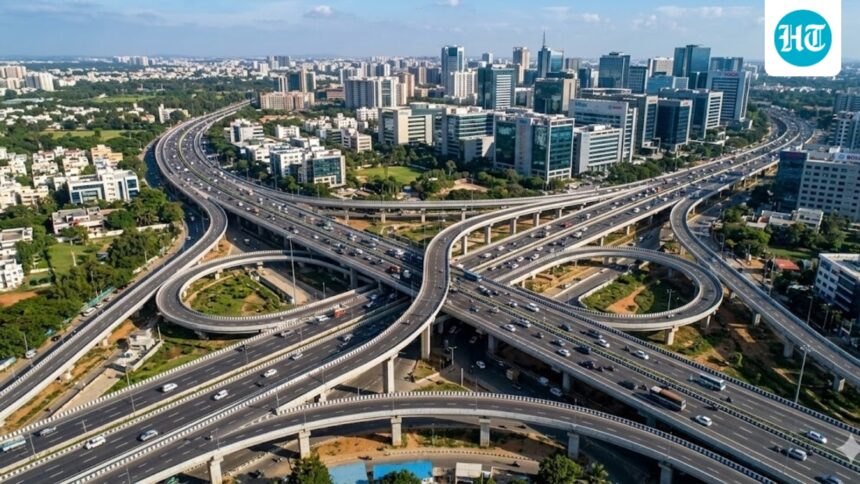
Most of these exchanges are expected to follow a cloverleaf design. This will allow vehicles to switch between highways and city roads without stopping, reducing congestion and congestion.
The size of the project is reflected in its estimated cost of approx $Rs 26,786 crore. This includes significant expenditures on land acquisition.