Aviation watchdog DGCA said on Tuesday that safety lapses cannot simply be blamed on pilots as it announced a series of tough safety measures for operators of non-scheduled flights, including public disclosure of aircraft maintenance history and safety rating mechanism, in the wake of recent aircraft accidents.

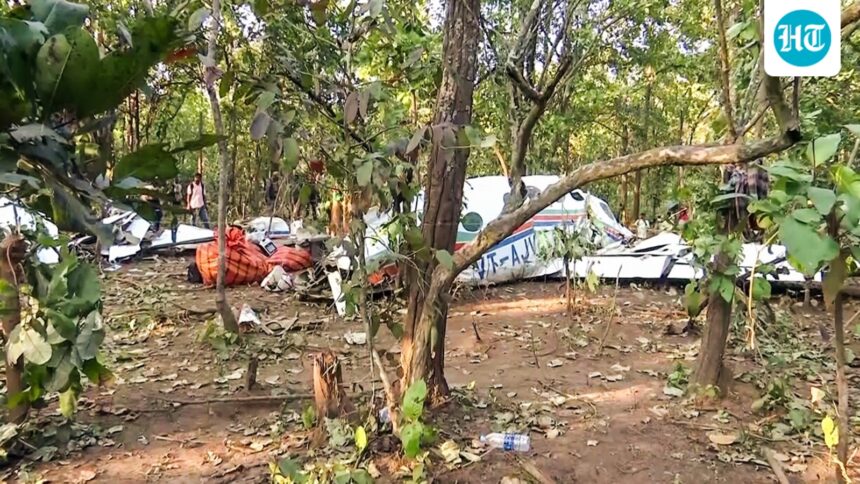
A day after a plane, operated by a non-scheduled operator (NSOP), crashed in Jharkhand, killing seven people on board, the DGCA held a meeting with all these operators on Tuesday.
The Directorate General of Civil Aviation said in a statement that the meeting was held “to address the recent rise in aviation accidents and emphasize the urgent need for increased focus on safety across the sector.”
“Safety must remain the absolute priority, superseding all commercial considerations, charter obligations or VIP movements. The organization’s leadership must prioritize safety above all other criteria,” the authority stressed.
“In support of this, the authority reiterated that the pilot’s decision to divert, delay or cancel a flight for safety reasons is final and must be respected by operators without commercial consequences,” the statement said.
In sending a strong warning, the regulator said that responsible managers and senior leadership of NSOPs would be held personally liable for systemic non-compliances and stressed that “pilots cannot be blamed for safety lapses”.
Among other steps, the DGCA will conduct intensified audits of NSOPs where random audits of the cockpit voice recorder (CVR), cross-verification of ADS-B data, fuel logs, and technical logs will be increased to detect unauthorized operations or ‘falsification’ of data.
$8 lakh to transport burn victim to Delhi”> Also Read | Air ambulance crash in Jharkhand: Family gathered $8 lakh to transport the burn victim to Delhi
Apart from the requirement for public disclosure of important safety information, including the age of the aircraft and maintenance history, the DGCA said there will be a safety rating in the NSOPs.
NSOPs pilots will face tougher penalties for non-compliance and could face license suspensions of up to five years.
The regulator said there would be increased monitoring of older aircraft belonging to NSOPs, as well as those undergoing changes in ownership.
“NSOPs that operate their own maintenance, repair and overhaul (MRO) facilities will be audited by the regulatory body; those found to lack competence will be required to outsource maintenance to approved organisations,” the statement read.
Furthermore, operators must establish systems to update the weather in real time and ensure strict compliance with standard operating practices (SOPs).
After the first phase of the special safety audit of the NSOPs is completed in early March, a second phase covering the remaining NSOPs will be carried out.
“In addition, a physical safety workshop will be held after the completion of the current extensive audits to ensure all stakeholders are aligned with these new operational mandates,” the DGCA said in the statement.
The high-level interaction with NSOPs on Tuesday came in the wake of a comprehensive review of accident data from the past decade, which identified non-adherence to standard operating procedures (SOPs), inadequate flight planning, and training deficiencies as the main causal factors of aircraft accidents, the DGCA said.
Monday’s accident was the second in less than a month, involving a plane operated by a non-scheduled airline. On January 28, Maharashtra Deputy Chief Minister Ajit Pawar and four others died in a plane crash near Baramati.