The Ministry of Home Affairs (MHA) on Monday unveiled India’s first comprehensive anti-terrorism policy, highlighting the country’s ‘zero tolerance’ principle and suggesting ways for intelligence-based prevention in the digital age.

The policy, called “Prahar” (meaning “attack” in Hindi), lays out a multi-layered strategy aimed at denying terrorists, their financiers and supporters access to money, weapons and safe havens.
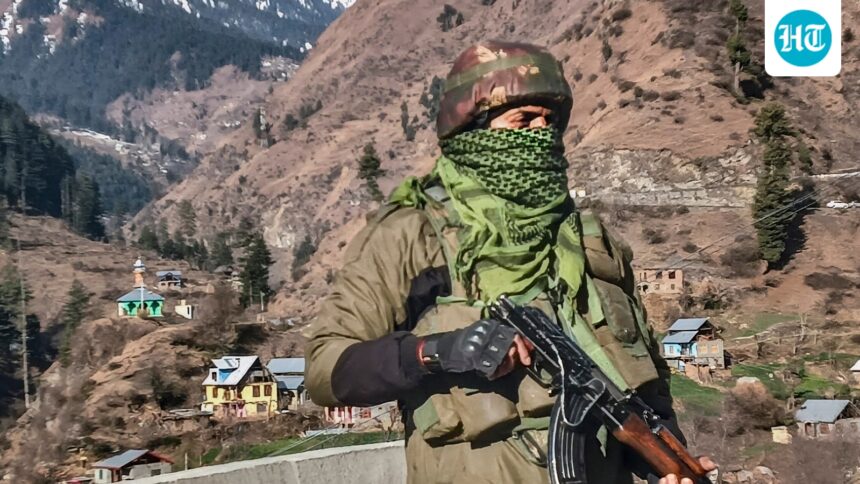
This came a day after the Indian Army, along with Jammu and Kashmir Police and CRPF, neutralized three terrorists in Kishtwar district. One of the killed terrorists was identified as the notorious commander Saifullah.
In its policy document, the ministry said that India has a “history of intermittent instability” in its immediate neighbourhood.
Read also | Extensive strike on terrorist network: Army ends after 326-day manhunt in Kishtwar
“India has always stood by the victims of terrorism and has been steadfast in its belief that there can be absolutely no justification for violence in the world,” she added, while underscoring India’s ‘zero tolerance’ policy.
What is prahar?
The Ministry has clarified the ideals on which the counter-terrorism strategy is based. These include prevention and responses, assembling internal capabilities, and more.
In keeping with these, PRAHAAR as an acronym stands for:
A: Preventing terrorist attacks to protect Indian citizens and interests
Response: Rapid and proportional responses to the threat posed;
A: Pooling internal capabilities to achieve synergy in a whole-of-government approach;
H: Human rights and “rule of law” based processes to mitigate threats;
A: Alleviating the conditions that enable terrorism, including extremism;
A: Coordinating and shaping international efforts to combat terrorism.
Response: Recovery and resilience through a whole-of-community approach.
The Center refers to “sponsored terrorism” across borders
The ministry said in its document that a small number of countries in the region “have sometimes used terrorism as an instrument of state policy.” She said India was affected by “cross-border sponsored terrorism”, referring to “jihadi terrorist groups” and their front organisations.
However, the MHA clarified that “India does not associate terrorism with any specific religion, race, nationality or civilization.”
She said that India has always condemned terrorism and its use by anyone.
MHA points out the dangers of the “dark web” and “encryption”
The ministry mentioned terrorist groups such as Al-Qaeda and the Islamic State in Iraq and Syria (ISIS), saying extremists operating from foreign countries conspired to promote terrorism.
“Their officials across the border often use the latest technologies, including the use of drones, to facilitate terrorism-related activities and attacks in Punjab and Jammu and Kashmir,” the ministry said.
She said that terrorist groups use social media and “instant messaging applications” for “propaganda, communication, financing and directing terrorist attacks.”
The ministry stressed that these groups “operate anonymously” using technological advances “such as encryption, the dark web, cryptocurrency wallets, etc.”