Read for 4 minutesNew DelhiUpdated: February 22, 2026 02:00 AM IST
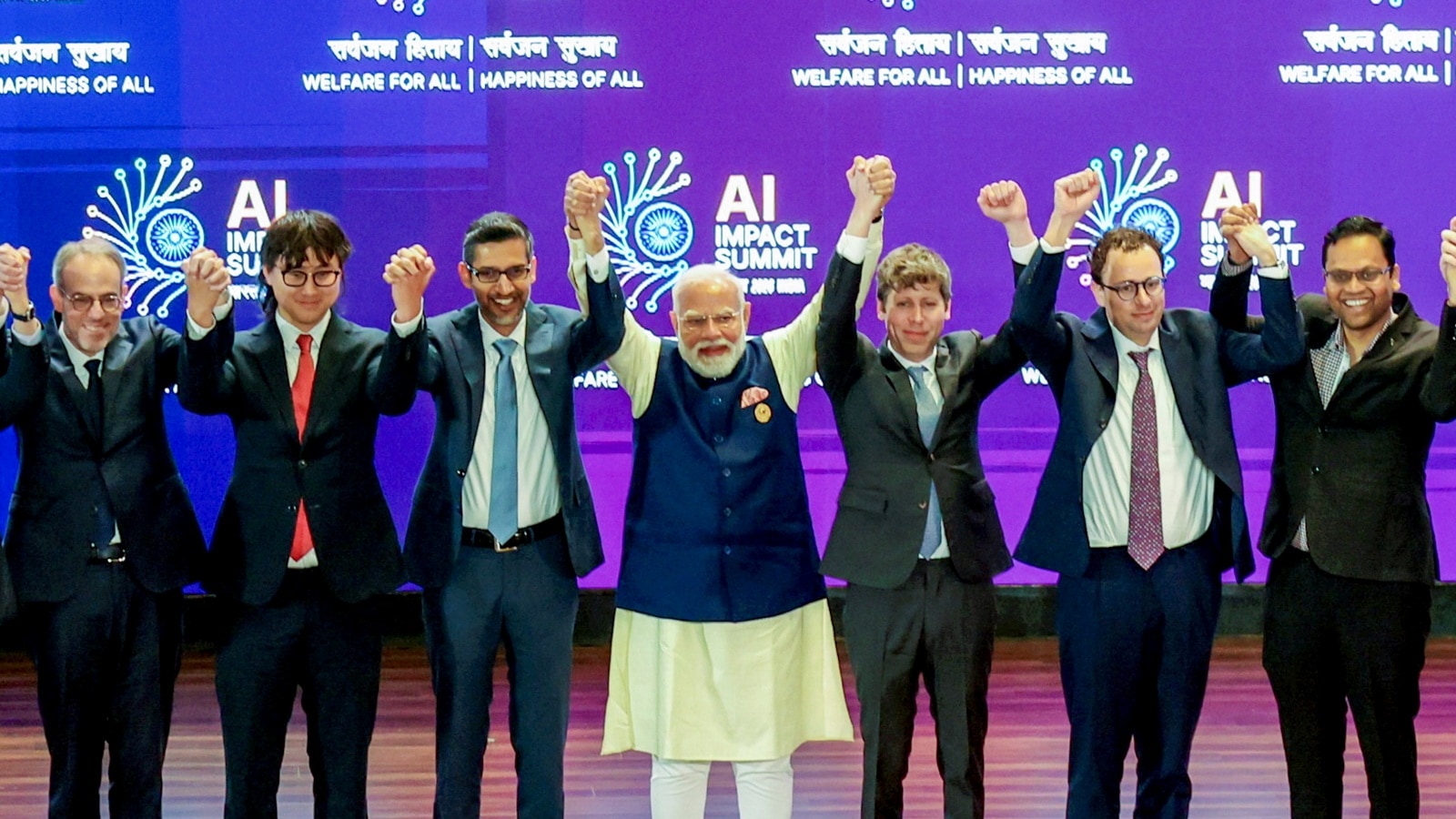 The declaration sets out several voluntary frameworks and platforms that countries have said they are participating in to share AI resources, use cases and expertise among other things (PTI photo)
From a charter on the “democratic diffusion” of artificial intelligence (AI) to pooling shared resources to a voluntary network of scientific institutions to connect those doing research on AI worldwide, 88 countries and international organizations, including the United States, China, France, Australia and the UK, Signed the ‘New Delhi Declaration on AI Impact’. – Key outcome document of the five-day India AI Impact Summit – Friday.
The story continues below the video
This represented a diplomatic success for India as it was able to convince many countries to accept the declaration. At last year’s AI Action Summit in Paris, the US and the UK refused to sign the declaration, flagging Europe’s regulatory approach to AI as a problem.
The Indian Express reported the details of the announcement on February 18.
Through the declaration, India focused on its key pitch ahead of the AI summit — to “democratize” AI while respecting the sovereignty of nations — a move government officials say runs counter to the general direction of AI development in the West, where technology is concentrated in the hands of a few companies and individuals. However, the next step – getting all the signatories to actually implement the commitments in the Declaration – will be a real challenge, given that all ratifications are voluntary in nature.
The declaration sets out a number of voluntary frameworks and platforms that countries have said they will participate in, including sharing AI resources, use cases and expertise. For example, it states that signatories have agreed to a “Charter for the Democratic Diffusion of AI”, under which they will “promote access to basic AI resources, support locally relevant innovation and strengthen resilient AI ecosystems while respecting national laws”.
“Wide-scale adoption of AI and AI-based applications has unprecedented potential for economic and social development. Open-source AI applications and other accessible AI approaches, appropriate and wide-scale diffusion of AI use cases will facilitate scalability, replicability and adaptability of AI systems across sectors,” it said.
Similarly, the signatories also noted the “Global AI Impact Commons” as a voluntary initiative that provides a practical platform to promote and enable the adoption, replication and scale-up of successful AI use cases across regions.
The story continues below this announcement
Recognizing the importance of security in AI systems, the adoption of industry-led voluntary measures and technical solutions, and appropriate policy frameworks that enable innovation that promotes the public good throughout the lifecycle of AI, the signatories endorsed the “Trust AI Commons”.
The Declaration endorsed the establishment of an “International Network of AI for Scientific Institutions” as a platform to connect scientific communities and streamline AI research capabilities, with the aim of removing structural barriers and increasing the availability of AI research infrastructure to promote its use in scientific research and development in countries. AI.
“AI has the potential to uplift all segments of society by enabling people through knowledge, cross-border AI solutions, information, services, opportunities and participation in social and economic activities. We recognize the importance of collaborations that facilitate the adoption of AI for social empowerment,” the declaration said. The signatories recognize the development of a voluntary and collaborative platform to facilitate the exchange of learning, knowledge and scalable practices to advance AI adoption for social empowerment.
Recognizing the need for people to skill and innovate, the signatories endorsed the Voluntary Guiding Principles for Innovation in the AI Age and the Playbook on AI Workforce Development, which will support participants in preparing for a future AI-driven economy. For building resilient AI systems, the declaration also includes “Voluntary Guiding Principles on Resilient, Innovative and Efficient Artificial Intelligence”.
The story continues below this announcement
It means that the European Union initially had reservations about some parts of the declaration because they were closely mirror the UN Charters. However, the alliance decided to sign a declaration recognizing India as a key trade partner.

Soumyendra Barrick is a special correspondent with The Indian Express, specializing in the complex and evolving intersection of technology, policy and society. With over five years of newsroom experience, he has been a key voice in documenting how digital transformations impact the daily lives of Indian citizens. Areas of Expertise & Focus Barrick’s reporting examines the regulatory and human aspects of the tech world. His main areas of focus are: The Gig Economy: He extensively covers the rights and working conditions of gig workers in India. Tech Policy & Regulation: An Analysis of Policy Interventions Impacting Big Tech Companies and the Broader Digital Ecosystem. Digital Rights: Reporting on data privacy, internet freedom and the prevailing digital divide in India. Authenticity & On-Ground Reporting: Barrick is known for his immersive and data-driven approach to journalism. A notable example of his commitment to authentic storytelling is when he tiles a food delivery worker for over 12 hours. This investigative piece quantifies the meager revenues and physical toll involved in the profession, providing a verified, ground-level perspective often lacking in tech reporting. Personal Interests Outside the newsroom, Soumyarendra is a self-confessed horology (watches) enthusiast, follows Formula 1 racing closely and is an avid football fan. Find all articles by Soumyarendra Barik here. … read more
© The Indian Express Pvt