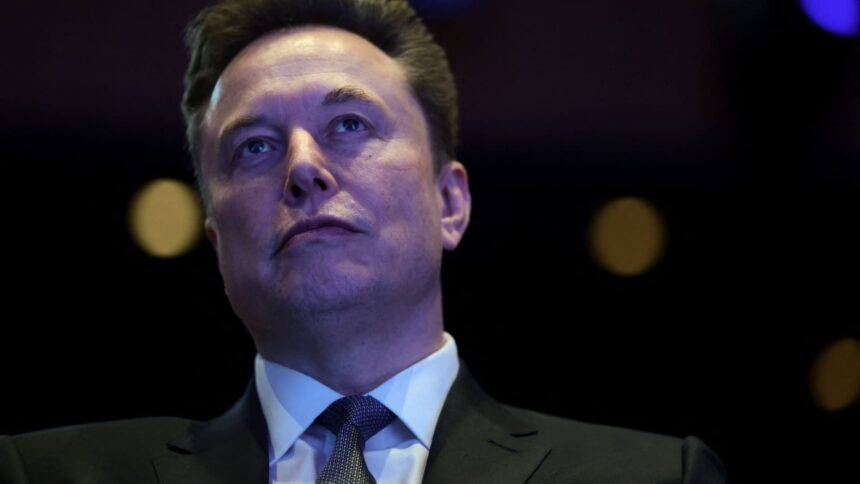
Elon Musk attends the US-Saudi Investment Forum in Washington, November 19, 2025.
Evelyn Hochstein | Reuters
A federal judge in Miami denied it Tesla An attempt to overturn a $243 million judgment in a lawsuit that requires the automaker to compensate the family of the victim of the fatal 2019 Autopilot crash as well as a survivor.
The collision in Key Largo, Florida, killed 22-year-old Nibel Benavides and seriously injured her boyfriend, Dillon Angulo. Tesla owner George McGee was driving his Model S sedan while using the company’s enhanced Autopilot, a partially automated driving system. During the trial, McGee said that when he dropped his phone while driving and rushed to pick it up, he thought the system would turn off if there was an obstacle in the road.
Instead, McGee’s car accelerated through an intersection at just over 60 mph, crashing into a nearby empty parked car and its owners, who were standing on the other side of their car.
A jury decided last year that Tesla should be held partly responsible for the fatal crash. Tesla has filed to appeal the lawsuit, seeking to overturn the ruling or proceed with a new trial.
“The evidence admissible at trial more than supported the jury’s verdict,” Miami federal court Judge Beth Bloom wrote in her order issued Friday, and that there had been no prior error or additional argument presented to justify a new trial or a change in the previous verdict.
“We are of course pleased, but also completely unsurprised, that the Honorable Judge Bloom upheld the jury’s verdict finding Tesla liable for the essential role played by Autopilot and the company’s misrepresentations of its capabilities in the accident that killed Knibel and permanently injured Dillon,” Brett Schreiber, lead attorney for the plaintiffs in the case, said in a statement.
Tesla’s lawyers did not immediately respond to a request for comment.
The ruling represents the latest setback for Elon Musk’s automaker, as the company tries to catch up in the emerging robotaxi market. Tesla is far behind alphabet Waymo in the United States and Baidu Apollo Go in China, where both companies provide commercial taxi booking services. Musk said last month that Tesla would have a “large-scale” network of driverless robotaxis in the United States by the end of 2026, but the company does not yet offer driverless ride-hailing services on a large scale and only operates a few robotaxis in Austin, Texas.
Gibson Dunn, who represents Tesla, argued that the compensatory damages in the Florida case should be reduced sharply from $129 million to no more than $69 million, which would have resulted in Tesla having to pay damages of $23 million. The company also said punitive damages should be eliminated or reduced to at most three times compensatory damages because of Florida’s statutory cap.
He watches: Why are investors divided over Tesla’s shift to robots and self-driving cars?