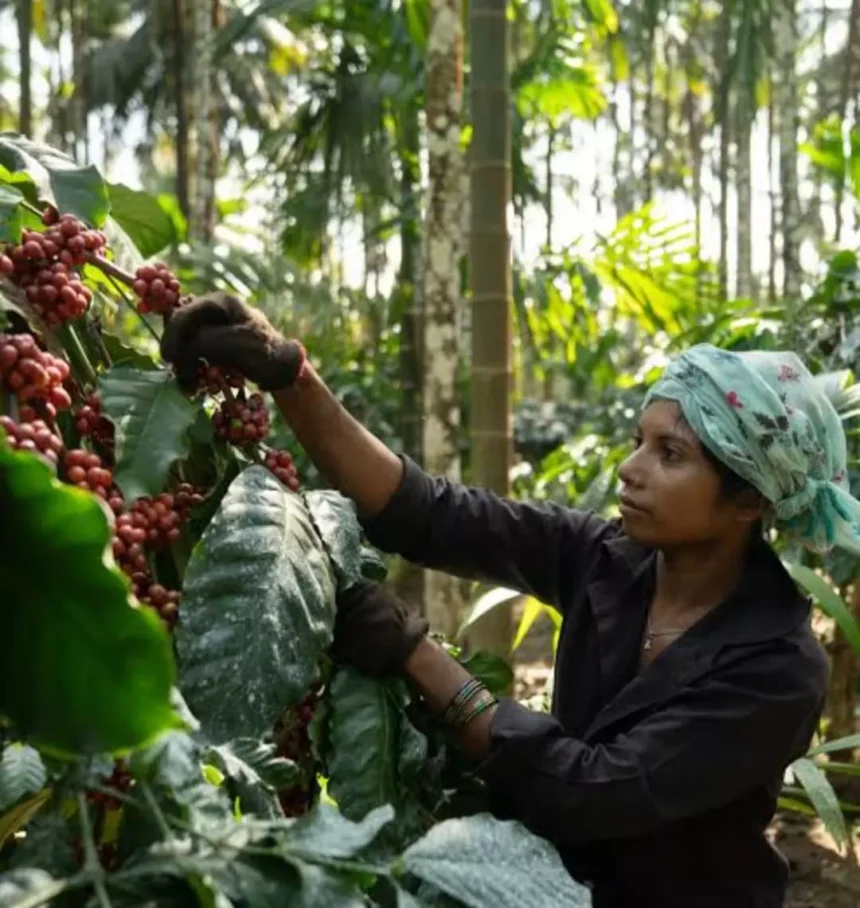
New Delhi : Climate change is negatively impacting the world’s major coffee-growing regions, with rising temperatures reducing yields and contributing to higher prices for the popular beverage, according to a new report.
Coffee is one of the most in-demand non-alcoholic beverages in the world, with an estimated 2.2 billion cups consumed daily. In the United States alone, at least two-thirds of adults drink coffee daily.
According to an analysis by Climate Central, a non-profit group of scientists and communicators who research and report the facts about climate change and how it affects people’s lives, the world’s coffee supply is under increasing pressure and climate change is playing an important role.
Climate Central analyzed temperatures from 2021 to 2025 and compared them to a hypothetical world without carbon pollution using the Climate Transition Index. The analysis calculated the additional number of days per year that climate change pushed temperatures above the coffee damage threshold of 30°C in all major coffee-producing countries.
“When temperatures rise above this threshold, coffee plants experience heat stress that can reduce yields, affect bean quality and increase plant susceptibility to disease,” the report said. “Combined, these effects can reduce coffee supply and quality and contribute to higher prices globally.”
She noted that lower yields and higher prices were hurting smallholder farmers the most.
“Smallholder farmers represent about 80 percent of global producers and about 60 percent of global supply, but have received only 0.36 percent of the financing needed to adapt to the impacts of climate change in 2021. The average adaptation cost for a one-hectare farm is US$2.19 per day – less than the price of a cup of coffee in many countries,” the report added.
The five largest coffee-producing countries – Brazil, Vietnam, Colombia, Ethiopia and Indonesia – are responsible for approximately 75% of the world’s coffee supply. The report indicated that these five countries now suffer from heat harmful to coffee for more than 144 days a year on average.
“If it were not for the impact of climate change, there would be about 57 fewer days each year with such heat. Changes in rainfall patterns could increase stress on coffee plants.
“Adequate and sustained rainfall is critical for their growth. Total annual rainfall between 59 and 79 inches is optimal and drought can lead to reduced yields,” the report said.
A drought in Brazil in 2023 has been linked to recent spikes in coffee prices. Pests and diseases such as coffee leaf rust and coffee berry borer can also affect the quantity and quality of the bean crop. She added that changing temperatures and rainfall patterns could affect their spread and management.
As climate change brings more extreme heat, changes rainfall patterns, and shrinks the amount of land that can be farmed, farmers are forced to adapt.
“Most coffee farmers are smallholders (cultivating less than about 12 acres of land) and may depend on this single crop for their livelihood, making them particularly vulnerable to the agricultural impacts of climate change. Changing conditions threaten the amount of land available for coffee production.
“Land suitable for coffee cultivation may decrease by 50 percent by 2050 without appropriate adaptation,” the report said. “The future range of coffee cultivation may migrate due to climate change. Current coffee growing areas may become too warm over time, especially for temperature-sensitive arabica.”
The analysis indicated that areas that were previously unsuitable for growing coffee, due to altitude and temperatures, may become more suitable in a warming world.
“While this could open up economic opportunities in new regions, it could also lead to deforestation as farmers seek farmland at higher (cooler) altitudes suitable for growing coffee. Sustainable agricultural practices can help farmers balance productivity and climate resilience.”
“Planting a taller tree canopy to shade coffee plants can protect them from harmful heat. Plants grown in full sun produce higher yields, but coffee grown under the shade of native trees has the additional environmental benefits of providing habitat for wildlife (especially for birds) and enriching the soil.”





![korean-style-spicy-tofu-and-fried-brussels-sprouts-[vegetarian]-–-one-green-planet](https://globalindiabroadcastnews.com/wp-content/uploads/2026/02/21036-korean-style-spicy-tofu-and-fried-brussels-sprouts-vegetarian-one-green-planet-300x200.jpg "korean-style-spicy-tofu-and-fried-brussels-sprouts-vegetarian--one-green-planet | GIBN")