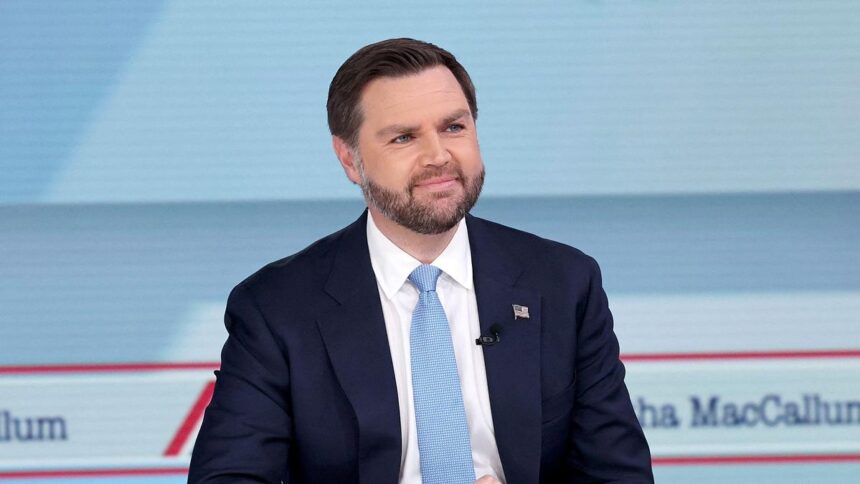
Iran said on Tuesday (Feb 17, 2026) it had agreed with the United States at talks in Geneva on “guiding principles” for a deal to avoid conflict, but Vice-President JD Vance said Tehran had not yet recognized all of Washington’s red lines.
Omani-brokered talks aim to rule out US military intervention to curb Iran’s nuclear program, weeks after the cleric-run state cracked down on mass demonstrations that killed thousands.
Iran’s supreme leader warned earlier in the day that the country has the capability to sink a US warship that was recently deployed to the region, after President Donald Trump mentioned “consequences” if the two sides do not reach a deal.

“Finally, we were able to reach a broad agreement on a set of guiding principles, based on which we will move forward and start working on the text of a potential agreement,” Foreign Minister Abbas Araghi told state television after Tuesday’s talks, which he described as “more constructive” than the round earlier this month.
He added that after the two sides draft texts for the agreement, “the drafts will be exchanged and a date will be set for the third round (of talks)”.
In Washington, Mr. Vance also appeared to indicate that the United States would prioritize diplomacy, but painted a more mixed picture.
“In some ways, it went well; they agreed to meet later,” Mr Vance said Fox News Interview.
“But in other ways, it’s very clear that the president has set some red lines that the Iranians are still unwilling to actually recognize and act on,” Mr. Vance said on “The Story with Martha McCallum.”
“We will continue to work on it. However, the president has the ability to say when he thinks diplomacy has reached its natural end,” Mr. Vance said.

Key spaces
After talks with Trump friend and roving ambassador Steve Wittkoff and the president’s son-in-law Jared Kushner, Mr. Araghchi also agreed.
Iran has for years sought relief from heavy US sanctions, including a US ban on buying oil from other countries.
Omani Foreign Minister Badr Albusaidi said the two sides had made “good progress” but warned that “a lot of work remains”.
Pressured by Washington, it ordered two aircraft carriers to the region. The first – the USS Abraham Lincoln, with about 80 aircraft – was 700 kilometers (435 miles) off the Iranian coast as of Sunday, satellite images showed.
Its position puts at least a dozen US F35s and F18 fighter jets within striking distance. A second carrier was sent over the weekend.
“A warship is certainly a dangerous weapon, but a weapon that sinks it is even more dangerous,” Supreme Leader Khamenei said in a speech on Tuesday (Feb 17, 2026).
Iran has insisted that the talks be limited to the nuclear issue, but Washington has previously wanted to discuss other issues, including Tehran’s ballistic missile program and support for armed groups in the region.
War games
Iran sought to demonstrate its military power as its Islamic Revolutionary Guard Corps began war games in the Strait of Hormuz on Monday to prepare for “potential security and military threats”, state television said.
Iranian politicians have repeatedly threatened to block the strait, a strategic route for oil and gas.
A previous attempt at diplomacy collapsed when Israel launched surprise attacks on Iran in June last year, triggering a 12-day war in which Washington briefly joined in bombing Iran’s nuclear sites.
The West fears Iran’s nuclear program is aimed at building a bomb, which Tehran denies.
Iranian President Massoud Pezheshkian reiterated in an interview published on Tuesday (February 17, 2026) that Tehran “definitely does not want nuclear weapons”. “If anyone wants to verify this, we are ready for such verification to happen,” he said.
Ali Fathollah-Nejad, director of the Center for Middle East and Global Order in Berlin, said Iran faces an “existential dilemma”. “Giving in to US demands could bring sanctions relief, which is essential to stabilize the regime and fund its repressive apparatus,” he said. AFP.
“However, any significant concessions on the nuclear, ballistic missile and regional proxies issues would delicately weaken its ideological and military standing.”