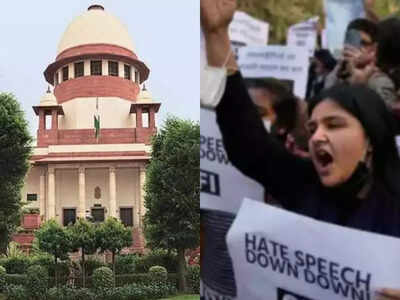
NEW DELHI: The SC on Tuesday criticized 12 “prominent” people who jointly filed a political impeachment bill for “targeting” CMs of BJP-ruled states for alleged hate speeches while making a plea for setting guidelines to restrain constitutional functionaries and bureaucrats from violating fidelity to constitutional ethics. While appearing for the petitioners, senior advocate Kapil Sibal told the bench comprising Chief Justice Surya Kant and Justices B V Nagarathna and Joymalia Bagchi that the country’s atmosphere had become toxic and “only the Supreme Court can and must remedy it”.However, the CJI-led body was quick to point out that the petition had selectively identified individuals while highlighting the issue. “This petition is definitely targeting specific individuals because it excludes others who routinely deliver these hate speeches.
Let the petitioners not create the impression that the order targets specific individuals.”The petitioners, including Roop Rekha Verma, Mohammad Adeeb, Harsh Mander, Najib Jung, John Dayal and Ashok Kumar Sharma, have cited the alleged hate speeches of Hemanta Biswa Sarma, Yogi Adityanath, Devendra Fadnavis, Pushkar Singh Dhami, Anantkumar Hegde and Giriraj Singh, all of whom belong to the BJP, as well as some remarks by some bureaucrats.
“Come with an impartial and impartial petition. The issue is important. Ultimately, there must be restraint in expression from all parties. We would like to say that all functionaries of political parties must be conscious of constitutional ethics and exercise restraint in their speeches, and any guiding principle must be applicable across the board,” the ICJ said.The bench said that there are political parties that brazenly deliver their speeches based on their sectarian ideology and openly declare hatred.
“You didn’t cite a single example from the other side.”When Sibal said he would delete all references to individuals in the petition, the bench replied that it would hear the PIL after making necessary amendments.“Political party leaders must promote brotherhood. Courts can issue orders. But the remedy lies in political parties and democratic institutions that live up to constitutional values and morals,” Justice Nagaratna said. Justice Nagarathna added: “The origin of expression is the process of thought. Can a court order change or restrict a person’s thought process? What about freedom of expression?”“It is an ambiguous petition,” Justice Bagchi told Sibal. “Instead of being a populist exercise, let it be a constructive constitutional exercise.”
“The monotony of politics should not dictate the introduction of a political isolation law.”Sibal sought two weeks to amend the PIL.Petitioners’ prayers are read as if they were fundamental duties of a citizen: a) to declare that the public speeches of constitutional officials or public office holders are subject to constitutional morality and must not violate the fundamental rights of others; b) Formulate guidelines for regulating the public discourse of constitutional officials and bureaucrats to ensure fidelity to constitutional ethics, without imposing prior restrictions or censorship.