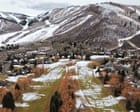
A record snow drought is plaguing the western US, leaving some thirsty states with less water and increasing fire risks in the dry months ahead.
According to measurements from the National Snow and Ice Data Center, snow cover in the West is about one-third of what it normally is this year, prompting widespread concern among experts and water managers that many key basins will be severely affected for the rest of the year.
Oregon, Colorado And Utah Statewide reported their lowest snowpack since the early 1980s, according to records.
“Snowpack in at least part of every western US state is the worst year in recorded history,” said Daniel Swain, meteorologist at Weather and Conditions. discussion shared to his website last week, calling the record-breaking warmth that precedes it “amazing.”
A record-breaking unseasonably warm winter is creating dire conditions across the region, according to federal forecasters.
“I’ve never seen a winter like this before,” said Mark Serez, director of the National Snow and Ice Data Center. Colorado Almost 40 years. “This pattern we’re in is very persistent.”
Snowpack is an essential source of water for basins that millions of people rely on, vast agricultural centers and ecosystems already under pressure. Snow water content at 91% of weather stations in the West on 1 February is an important measure that gives an idea of how much melt is available for use.
Excellent lows Added pressure to the ongoing urgent negotiations The future of the Colorado Riverthe 1,450-mile (2,300km) waterway flows through the western US and supplies about 40 million people in seven states, 5.5m acres (2.23m hectares) of agricultural land, dozens of tribes and parts of Mexico.
About 80% of the river supply goes agricultureincluding water–Intensive crops, such as alfalfa and hay, are used as fodder for livestock.
Representatives from states that depend on its flows are at an impasse over how to manage the dangerous basin as resources continue to grow. Chronic overconsumption and mounting pressures from the climate crisis have acted as a one-two punch to tip the system into crisis.
Negotiators face a week-end deadline before the US Bureau of Reclamation imposes its own plan, an outcome expected to lead to litigation and further uncertainty. But according to experts, the challenging conditions act as their own deadline, saying immediate action is needed for devastating low flows.
The February water supply outlook for the Colorado River Basin is the worst in more than three decades. More than two-thirds of the river’s water is filled with mountain snow.
“A river doesn’t wait for process or politics,” said Matt Rice, Southwest Regional Director for the conservation organization American Rivers.
Snow drought may also start early, experts said Fire the season As snow disappears earlier than average, soils are exposed to warmer weather in the spring and summer, causing soils and vegetation to dry out quickly, said Daniel McEvoy, a researcher with the Western Regional Weather Center.
Warmer temperatures created an elevational gradient for the snowpack. Snow is present at higher altitudes but not melted or at lower altitudes. A lack of snow cover can lead to rapid drying of the landscape, resulting in a longer fire season or reduced flow capacity as snow melts.
“It was so warm, especially in December, that the snow was only falling on the higher parts of the mountains,” McEvoy said. “And then we go into January and it’s been very dry and warm almost everywhere for the last three to four weeks.”
Meteorologists are expecting wet, cold weather with some snow across the West this week, so it could be the peak of the snow drought. But it will still be warmer than normal in many areas and scientists are not optimistic that there will be enough snow.
“You know, I don’t think there’s any way we’re going to go back to average or anywhere close to that,” said Russ Schumacher, professor of meteorology at Colorado State University and Colorado State climatologist. “But if it’s more active, at least we can offset those deficits a little bit.”
The Associated Press contributed to the reporting